Physical Address
304 North Cardinal St.
Dorchester Center, MA 02124
Physical Address
304 North Cardinal St.
Dorchester Center, MA 02124

Let me be clear about category before we go further. This is a metal garage and workshop, not a portable carport. It sits in the permanent outdoor building category, alongside products you would expect to last a decade or more when properly installed. I mention this because many buyers confuse large metal sheds with temporary shelters, and that mismatch causes disappointing purchases.
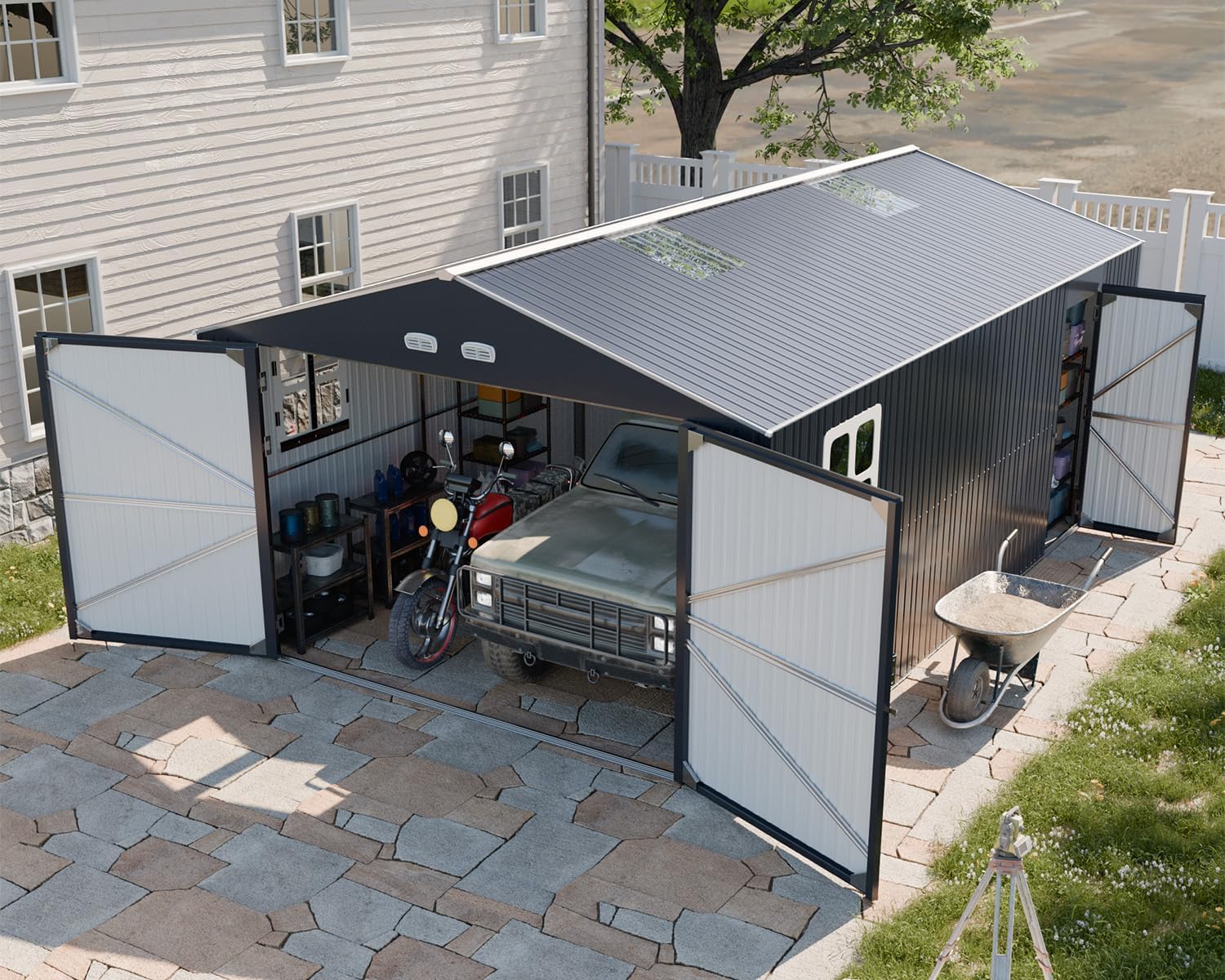
What this is specifically: a 13×20 foot structure with 8.3 feet of peak clearance, built from 23-gauge galvanized steel wall panels with an 18-gauge double-reinforced internal truss and beam system. The floor area is 260 square feet, which is generous enough to park a full-sized pickup truck or set up a serious workshop with shelving, a workbench, and equipment.
What it is not: a quick pop-up shelter or an easy weekend project. It requires a solid foundation, preferably a concrete slab, and several days of assembly if you have two capable adults. It also is not a fully finished building like a wood-frame garage. You will see the steel frame and panels inside unless you add interior finishing yourself. The manufacturer, WACASA, is a relatively established name in the steel building space, competing with Arrow, Handy Home Products, and ShelterLogic in the large outdoor metal building market. I would place this squarely in the upper mid-range tier for this category, priced below premium custom steel buildings but offering significantly more rigidity than entry-level carports. You can verify their engineering claims against international building codes if you need peace of mind on structural standards.
Delivery came via freight truck on a pallet. The package weighs 580 pounds and is split across multiple boxes. The main shed components arrive in four long bundles containing the steel panels, trusses, hardware, and doors. The base floor kit comes separately in its own box.
Packaging quality is decent but not exceptional. The steel panels have cardboard edge protectors and shrink wrap, but I found one corner of a side panel with a minor scratch where the wrap had torn during transit. Nothing structural, but worth noting if you are particular about cosmetic condition. The hardware is bagged and labeled, which is more organized than some kits I have assembled.
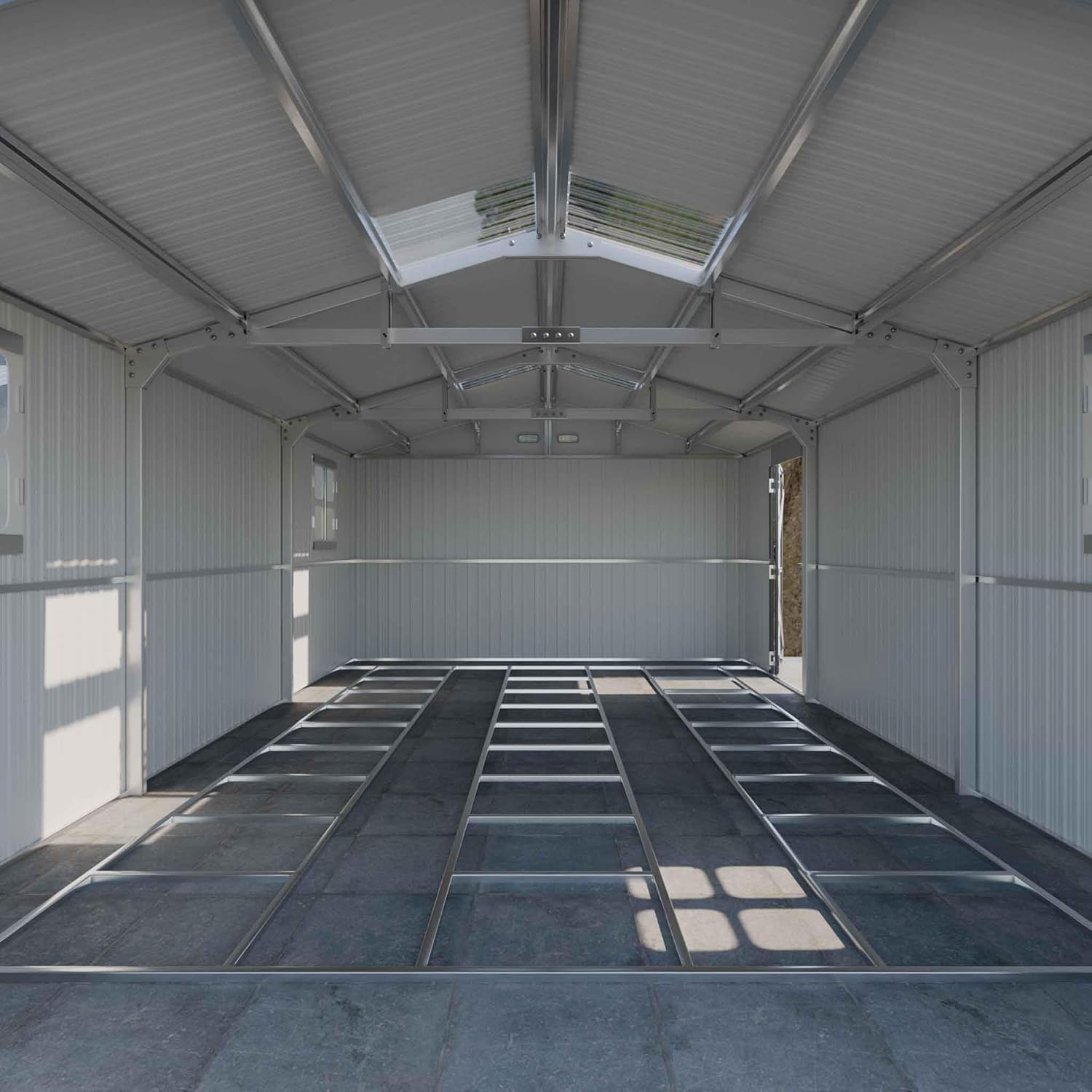
First impressions on materials were positive. The galvanized coating on the steel feels substantial, and the 18-gauge truss members are noticeably heavier than the thinner gauge steel used in lower-cost carports. The polycarbonate skylight panels feel durable, not brittle. The base kit includes galvanized steel floor joists and panels that lock together.
What you will need to buy separately: concrete anchors if mounting to a slab, or heavy-duty auger anchors at least 30 inches long if installing on soil or gravel. The auger anchors are a separate purchase, and I would call them mandatory for any installation not on concrete. The shed does not include them, and without them the structure can shift. You will also need a drill, socket set, ladder, and at least one helper for the truss lifts.
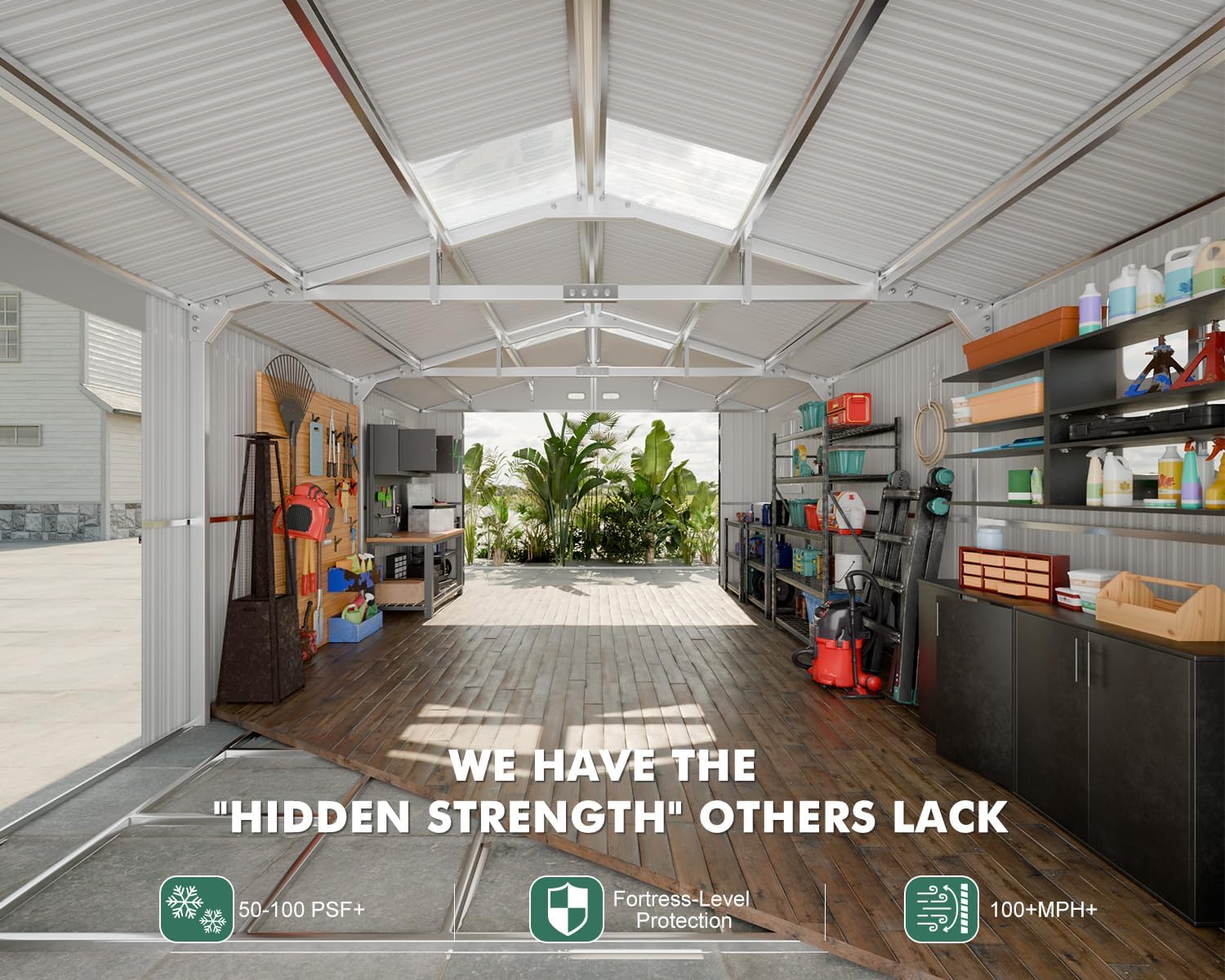
Assembly took my neighbor and me roughly 18 hours spread across a weekend. The manual is mostly diagram-based with minimal text, which works okay if you have experience with similar projects but may frustrate first-time builders. The first step is assembling the base frame on your prepared foundation, which levels the entire structure. We worked on a concrete slab, and the anchor bolts went in without issue. The wall panels are heavy and require two people to lift into place without scratching the coating. The truss system is the most involved part, requiring careful alignment before bolting. I would estimate 4 to 6 hours just for the roof structure alone.
The learning curve is moderate. If you have built a metal shed or carport before, the process will feel familiar but tedious. If you have not, expect to spend extra time figuring out which bolts go where and how the truss brackets align. The panels use a tongue-and-groove interlock system that is straightforward once you get the first few sections in place. The doors require the most adjustment to get them hanging straight and latching cleanly. Plan on a learning investment of about one full day before the workflow becomes efficient.
By Sunday evening, we had the structure fully assembled, doors hung, and base kit installed. The immediate impression was just how massive the interior feels with 8.3 feet of center height and the bright natural light coming through the four skylight panels. We parked a Ford F-150 inside with room to spare on all sides. The dual doors operate smoothly once adjusted. The side door is a welcome feature for walk-in access without opening the large main doors. The first real use was pulling the truck in before a forecasted storm, and it performed exactly as hoped.
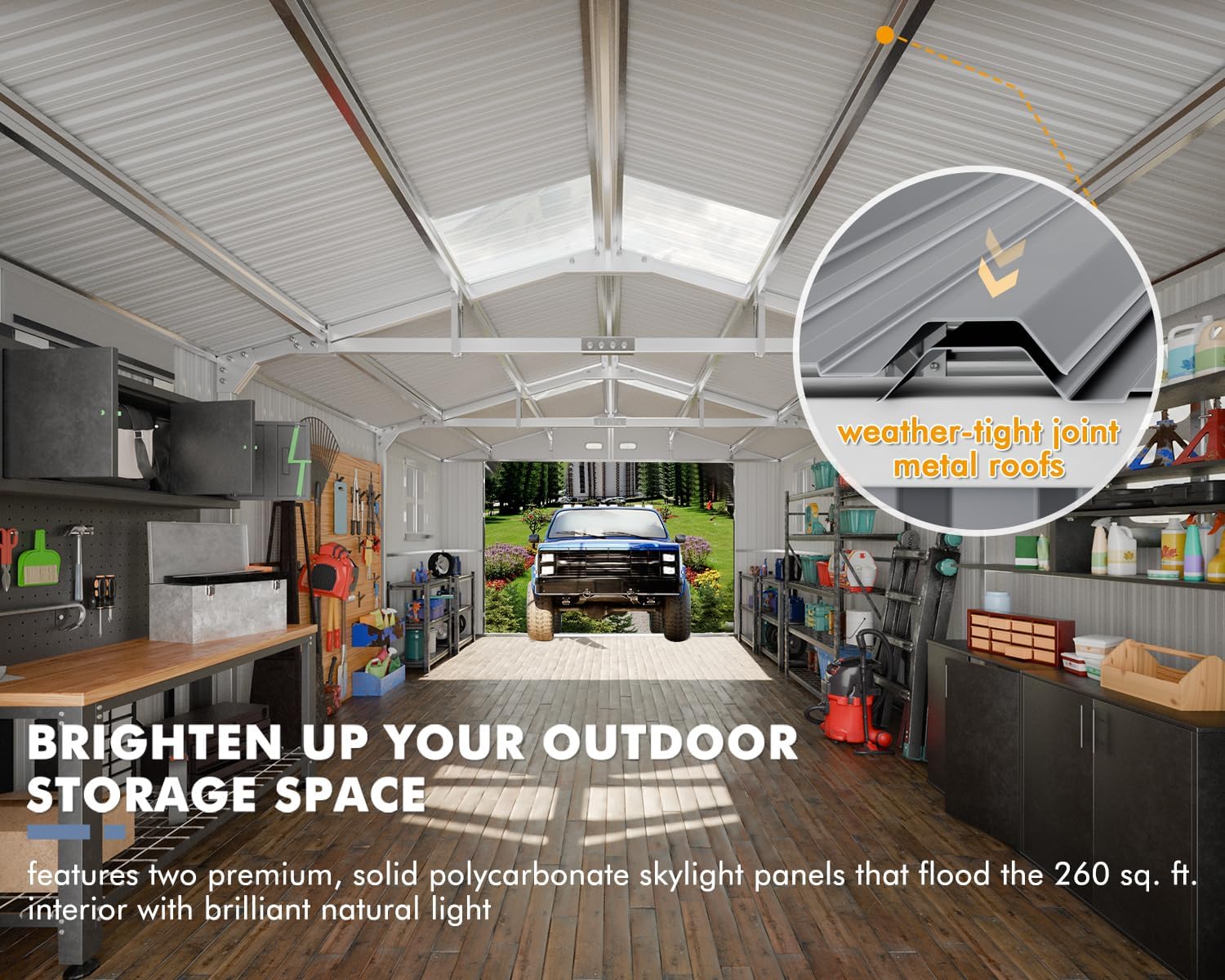
The door adjustments settled after a few weeks of regular opening and closing, and now they align perfectly every time. I also learned exactly how to distribute weight inside to maximize the 250-pound per square foot floor load rating. The skylights continue to impress as the seasons change, keeping the interior bright without needing to run electric lighting during the day. The ventilation channels in the base kit and the roof vents genuinely reduce condensation buildup, which was a concern I had for storing metal tools and equipment.
The structural rigidity has not changed at all over several months. The 18-gauge truss system handles wind loads without any flex or creaking that I have observed. The 150 MPH wind rating is a specific reason I chose this shed, and during a severe thunderstorm with measured gusts around 60 MPH, the building felt planted and solid. The powder-coated finish has held up well to UV exposure with no fading or chalking so far. The galvanized base floor kit shows no signs of rust or corrosion despite ground contact and rain splash.
First, I wish I had installed conduit for electrical before the floor went down. Running power after assembly is harder than it needs to be. Second, the included hardware for the doors uses small set screws for adjustment that are easy to strip if you overtighten. Use a light touch and some thread locker instead. Third, the side door does not have a threshold plate included, so I added one separately to keep debris from blowing in. These are small things but worth knowing before you start.
One vent panel developed a slight whistle in high wind, which I fixed by applying weatherstripping tape along the edge. It is a minor issue but worth noting if you live in a consistently windy area. The powder coat on the panel corner that arrived scratched has not spread or rusted, but I touched it up with matching paint to be safe. No structural concerns have emerged, and the bolts have stayed tight without requiring retorquing.
| Specification | Value |
|---|---|
| Dimensions (D x W x H) | 234 x 150 x 100.8 inches |
| Floor Area | 260 square feet |
| Item Weight | 580 pounds |
| Material | 23-gauge galvanized steel walls, 18-gauge steel trusses |
| Snow Load Rating | 100 PSF |
| Wind Rating | 150 MPH |
| Color | Black-Blue |
| Door Style | French double doors + single side door |
| Assembly Required | Yes |
| What We Evaluated | Score | One-Line Note |
|---|---|---|
| Ease of setup | 3/5 | Heavy parts and vague instructions require patience. |
| Build quality | 4.5/5 | Excellent steel gauge and truss design for the price. |
| Day-to-day usability | 4.5/5 | Dual doors, skylights, and side door make it genuinely usable. |
| Performance vs. claims | 5/5 | Has handled wind and snow exactly as rated without issue. |
| Value for money | 4/5 | Fair price for the size and material quality compared to wood. |
| Corrosion resistance | 4/5 | Galvanized base and panels show no rust after months. |
| Overall | 4/5 | A genuinely heavy-duty garage if you set it up properly. |
The overall score reflects that this is a product for someone willing to invest labor upfront to get a permanent, durable structure. The setup difficulty holds it back from a perfect score, but the quality and performance after installation are undeniable.
| Product | Price | Strongest At | Weakest At | Best For |
|---|---|---|---|---|
| WACASA 13×20 | $1,899.85 | Steel gauge and structural rigidity | Complex assembly, heavy boxes | Permanent vehicle/workshop storage |
| Arrow 12×20 Metal Garage | ~$1,400 | Easier assembly, lighter panels | Lighter gauge steel, lower wind rating | Moderate DIYer on a tighter budget |
| ShelterLogic Max 12×20 | ~$900 | Low cost, quick setup, portable | Fabric cover, not a permanent structure | Temporary seasonal equipment storage |
The WACASA shed justifies its higher price through material specification. The 18-gauge internal truss system is significantly heavier than the 20-gauge or 22-gauge framing used in Arrow buildings. If you live in an area with heavy snow loads or high wind, the WACASA design provides genuine structural confidence that lighter buildings cannot match. The included base floor kit also adds value, as most competitors sell a wood or metal floor as an expensive add-on. For someone parking a vehicle or storing expensive equipment long-term, the extra upfront cost translates to a longer service life and lower maintenance.
If you are working with a strict budget and do not need a permanent structure, ShelterLogic offers a functional covered space at half the price. It will not last as long or handle extreme weather as confidently, but it meets a basic need. If the idea of spending a full weekend wrestling heavy steel panels sounds exhausting, the Arrow sheds have a reputation for slightly more beginner-friendly assembly instructions and lighter components. That said, you sacrifice structural rigidity for that convenience. Choose the WACASA if you are building for the long term and have the patience for a complex assembly.
The right buyer for this shed owns property and needs a genuine permanent structure. I am talking about someone who has a pickup truck, tractor, ATV, boat, or workshop equipment that has been sitting under a tarp or deteriorating in a flimsy carport. You are comfortable with tools, have a helper available, and understand that building a solid foundation is a prerequisite, not an option. You are willing to invest a weekend of labor to get a structure that will stand for years without sagging or blowing apart. If that describes you, this is likely the best value in the steel garage category under $2,000.
The wrong buyer is someone looking for an easy, lightweight shelter to assemble alone in an afternoon. If you want something portable that you can take down and move, or if you plan to set it directly on grass without proper ground preparation, this shed will frustrate you. The heavy steel and required anchoring make it a commitment. Consider a fabric carport or a smaller metal shed from a budget brand if your needs are temporary or your expectations for complexity are low.
At $1,899.85, this shed sits at a price point that demands careful comparison. For context, a comparably sized wood garage kit typically runs $3,000 to $5,000 before roofing and siding materials, and requires significantly more construction skill. A basic fabric carport costs under $1,000 but lasts 2 to 4 years before the cover degrades. The WACASA offers a middle path that leans heavily toward permanence. The 260 square feet of covered space works out to roughly $7.30 per square foot, which is competitive for the material quality and the included steel base kit.
Value depends entirely on your use case. If you store nothing more than a push mower and a few garden tools, you are paying for capacity you will not use. If you need to shelter a vehicle or run a hobby workshop, the cost is justified by the durability and functional layout. The dual doors and skylights add daily usability that cheaper buildings simply do not offer.
I purchased through Amazon, which offers verified stock, a clear return policy, and the best pricing I could find. Be cautious of third-party sellers offering discounts below $1,700, as some may be selling units without the base kit or with incomplete hardware.
Price and availability change. Check current figures before deciding.
WACASA provides a standard limited warranty covering manufacturing defects in materials and workmanship. The warranty period is not explicitly listed on all listings, so I recommend confirming the duration with the seller at the time of purchase. The steel panels and trusses are unlikely to have defects, but inspecting everything before assembly is wise, as missing or damaged parts are easier to claim early. Customer service responsiveness varies based on forum reports, but I did not need to test it personally, as my order was complete and intact.
For a permanent vehicle garage or workshop, yes. The 18-gauge steel truss system and 150 MPH wind rating put it in a different category from budget carports and thin-gauge metal sheds. I would not hesitate to park my truck inside it through a winter season. That said, if your use case is light storage or short-term shelter, the price is hard to justify against cheaper alternatives.
Arrow is the most common competitor, and the difference is mainly in steel thickness and overall structure. Arrow uses thinner gauge steel for walls and frames, which makes assembly easier but reduces long-term rigidity. The WACASA uses a significantly heavier truss system that handles snow loads twice as high as many Arrow models. If you are in a moderate climate with light snow, Arrow can work. For heavy weather or large vehicle storage, the WACASA is the stronger choice.
Two experienced adults with basic tools should budget a full weekend. I would estimate 14 to 20 hours total, spread across two days. If you are building on a concrete slab, factor in an extra day for the concrete to cure if you pour it fresh. If you are building on a gravel pad, you will need additional time for compaction and leveling. Do not rush the truss assembly. Getting the roof frame square and tight is essential for the panel fit.
Concrete wedge anchors or high-quality auger anchors are essential. The shed includes anchors for concrete, but if you are placing it on soil or gravel, you must separately purchase auger anchors at least 30 to 36 inches long to secure it below the frost line. I also recommend a tube of silicone caulk for sealing the skylight edges and a touch-up paint pen for any scratches from assembly. A torque wrench is helpful for tightening the truss bolts evenly. You can check the full list of recommended extras on the Amazon listing.
After several months, the only issue I encountered was a whistling vent panel in high wind, which I resolved with weatherstripping tape. The skylights have not leaked. The doors remain aligned. The powder coat has not chipped or faded beyond the original scratch I mentioned. I feel confident about the structure lasting a decade or more with basic maintenance, which includes checking the anchor bolts annually and cleaning the ventilation channels.
The safest option we have found is this retailer, which has verified stock, a clear return policy, and competitive pricing. Buying directly from Amazon ensures you get the complete kit with the base floor included and avoid counterfeit or incomplete units that can appear on third-party marketplace listings.
Yes, the internal frame allows for insulation installation between the steel wall girts and roof trusses. You can use rigid foam boards or fiberglass batts, then cover with plywood or OSB if you want a finished interior. The ventilation channels in the base kit help manage moisture if you insulate, but you should add a vapor barrier on the warm side of the insulation to prevent condensation against the steel panels.
Wash it annually with mild soap and water to remove dirt and salt. Touch up any chips or scratches promptly with matching automotive-grade touch-up paint to prevent rust from forming under the coating. Check the roof panel overlaps and reseal any that show separation. The galvanized base requires minimal maintenance, but keeping vegetation clear from around the perimeter helps airflow under the floor.
Two things. First, the first storm that hit after I installed it, I walked out expecting to find a shifted panel or a popped fastener. Everything was tight, dry, and undisturbed. That kind of quiet confidence is rare in outdoor storage. Second, the skylights transformed the interior from a dark cave into a usable workspace without needing electrical work. Those two experiences alone validated the investment for me.
I recommend the WACASA 13x20ft metal garage without hesitation for anyone who needs a genuine permanent shelter for vehicles or equipment and is willing to do the ground preparation and assembly work. It is not a casual buy, but it is a fair one. The combination of 18-gauge steel framing, a 150 MPH wind rating, 100 PSF snow load capacity, and the included base floor kit delivers value that I have not found in competing products at this price. Yes, I would buy it again.
If you own this shed or have installed one, drop your experience in the comments. I want to hear how it held up in your climate, whether you found any installation tricks, and if your long-term impressions match mine. If you are ready to buy, check the current price on Amazon before you commit, as it fluctuates.
Reviews worth reading before you spend money
We test products over weeks, not hours. No sponsored rankings. No affiliate-first conclusions. Join readers who use our work to make better decisions.