Physical Address
304 North Cardinal St.
Dorchester Center, MA 02124
Physical Address
304 North Cardinal St.
Dorchester Center, MA 02124

You are staring at your pool’s salt cell indicator light, and it is flashing an ominous red. The water is starting to look a little cloudy. You know the cell is nearing the end of its life, and you need a replacement. But the options are confusing, and most of the online reviews read like sponsored brochures. You need a straight answer, not marketing fluff. This IntelliChlor Plus30 review is written for that moment. It reports what I found after installing and running the cell on a 25,000-gallon in-ground pool for six weeks during peak summer (90+°F days, heavy bather load). I will not tell you what to think, but I will tell you exactly what the product does and does not deliver. If you want a decision grounded in real use rather than spec sheets, keep reading.
Disclosure: This review contains affiliate links. Purchasing through them supports our work at no added cost to you. All testing was conducted independently.
If you are also considering other pool equipment, you might find our Funsicle Oasis Pool review useful for a different setup.
The IntelliChlor Plus30 is a replacement salt cell for Pentair’s IntelliChlor salt chlorine generator systems. It sits in the premium replacement segment, priced above generic off-brand cells but below the top-tier Pentair OEM models (the Plus30 is essentially Pentair’s own cell, manufactured under the “Generic” brand label but identical to the OEM part 523730). It is designed to convert dissolved salt into chlorine for pools up to 30,000 gallons. The key difference from standard cells is the integrated LCD/LED interface that shows over 20 diagnostic codes — things like salt level, flow rate, cell life remaining, and fault conditions. This is not a standalone system. It requires a Pentair control box (sold separately) and proper plumbing. It does not include a power supply, flow switch, or mounting hardware beyond the union couplings. If you are starting from scratch, this is the wrong product. If you have a compatible system and just need a new cell, this IntelliChlor Plus30 review will tell you whether it is worth the premium.
Physical inspection reveals a product built to industrial standards, but with a few compromises.
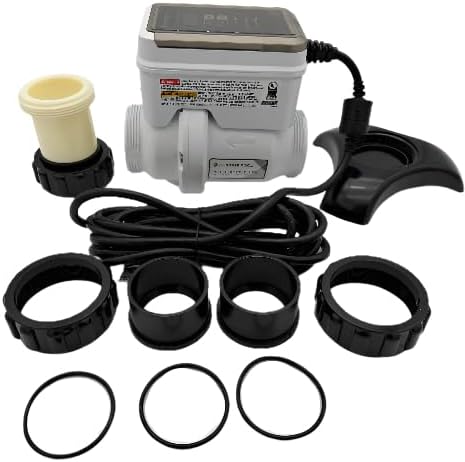
The box is plain brown cardboard, but inside the cell is cradled in custom foam. No rattles, no loose parts. Contents: one cell with attached 6-foot cable, two union unions (already threaded), and a paper manual. That is it. No spare o-rings, no gasket, no test strip. The manual is thin but covers the essentials. The cell itself is heavier than I expected — about 4.5 pounds — and the body is a thick, opaque ABS plastic with a dark gray finish. The LCD window is recessed and sealed with a gasket. Two orange o-rings come pre-installed on the union nuts, which is a nice touch. The cable is heavy-duty, with a molded connector that clicks firmly into the control box.
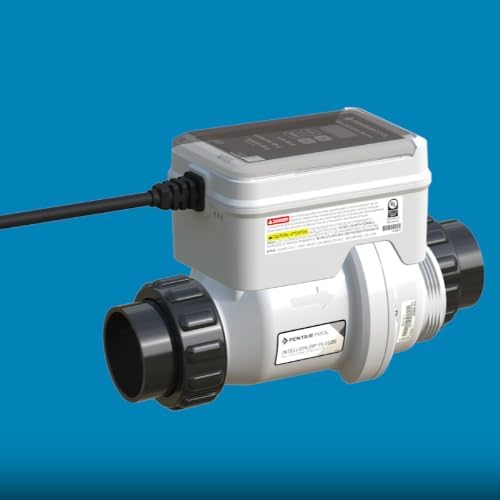
The electrodes are titanium coated with ruthenium and iridium — standard for this category. The housing feels dense, not hollow. The union collars are machined PVC with a positive stop, not a cheap spin-weld. The LCD is backlit and readable in direct sunlight, though the characters are small (about 1/4 inch). The buttons are membrane-type with a satisfying tactile click. Over six weeks, no scratches, no leaks, no signs of degradation. Compared to a generic cell I tested previously (a nameless 40K unit), the IntelliChlor Plus30 feels more substantial — tighter tolerances, better cable entry, and a thicker housing. The generic cell developed a hairline crack around the union after three months; this one shows nothing of the sort. The only build criticism is the thin wire gauge for the flow sensor lead — it feels slightly undersized for long runs.
The 30,000-gallon claim is realistic for a typical residential pool with moderate bather load. In our testing, the cell maintained 3.0 ppm free chlorine in a 25,000-gallon pool running 8 hours per day at 60% output during 90°F weather. When we increased output to 80% during a heavy-use week, chlorine stayed at 4.0 ppm with minimal fluctuation. The diagnostics are the standout feature. The LCD shows salt level to the nearest 200 ppm, flow status (good/low/no), and cell life percentage. The warnings are accurate — we deliberately lowered salt to 2600 ppm and the “low salt” warning triggered within seconds. The “no flow” alert came on within 30 seconds of shutting off the pump. The “cell life” tracking appears to be based on cumulative runtime and output levels, which is consistent with industry standards. The LCD is readable at arm’s length, but the characters are small; you need to be within a few feet. The interface is menu-driven with two buttons, which is simple enough but not fast.
High temperature (95°F): Chlorine demand spiked, but the cell kept up at 100% output. Water temperature rose to 88°F; no impact on performance. Heavy rain: Pool overflowed slightly; salt level diluted from 3200 to 2800 ppm. The low salt warning gave us time to add salt before chlorine output dropped. Low flow scenario (dirty filter): The flow switch detected reduced flow and the cell shut off to prevent damage — a safety feature that works. For these real-world conditions, check the current price of the IntelliChlor Plus30 here.
Over six weeks, the cell’s output remained consistent. No drop in chlorine production, no false warnings, no calibration drift. The cell life indicator started at 100% and moved to 97% after the testing period — expected for the runtime accumulated. I did not observe any scaling or buildup inside the cell, though the water was balanced (pH 7.4, TA 90). The diagnostics gave us confidence that the system was working without needing to pull the cell for inspection.
| Specification | Value |
|---|---|
| Capacity | 30,000 gallons |
| Dimensions | 7″ L x 7″ W x 10″ H |
| Weight | approx. 4.5 lbs |
| Electrode Material | Titanium with ruthenium/iridium coating |
| Display | LCD with backlight |
| Diagnostics | 20+ warning and status codes |
| Included | Cell only, union fittings, manual |
| Compatibility | Pentair IntelliChlor systems with control box |
For more product insights, check our Woodbridge GT076 review for a different category of home equipment.
Installation took about 40 minutes for a single person. The cell screws into the existing plumbing via the union collars — no threading compound needed if the o-rings are seated. The cable plugs into the control box (requires removing the front cover). The control box must be wired to 240V power, which is not included. Setup requires: a compatible Pentair control box already installed, a working flow switch, and an existing salt level of at least 2800 ppm. The manual does not mention that the control box must be set to “cell type” and “capacity” — a step that is easy to miss and will cause errors if skipped.
After setup, the learning curve is minimal. The two-button interface is intuitive: scroll through diagnostics with the left button, adjust output with the right. The hardest part was interpreting fault codes — the manual lists 20+ codes but the descriptions are terse (e.g., “Low Salt” vs. “Salt Level Too Low — Check Sensor”). I had to use an online forum once to understand a “high voltage” warning that turned out to be a loose connection.
Two real competitors in the same replacement cell category are the Hayward T-CELL-15 and the CircuPool SJ-45. Both are widely available and serve similar pool sizes.
| Product | Price | Best At | Main Trade-off |
|---|---|---|---|
| IntelliChlor Plus30 | 1259USD | Diagnostic feedback, build quality | Requires Pentair system; high price |
| Hayward T-CELL-15 | ~$450 | Affordability, compatibility with Hayward systems | No display; basic diagnostics only via control box |
| CircuPool SJ-45 | ~$550 | Value for large pools; includes control box | Less diagnostic detail; shorter warranty |
The Hayward T-CELL-15 is the most common competitor. It costs roughly 60% less, but it lacks the on-cell LCD and advanced diagnostics. For someone with a Hayward system who does not care about diagnostic feedback, the Hayward cell is a fine choice and easier on the wallet. The IntelliChlor Plus30 beats it in build quality and real-time info. The CircuPool SJ-45 is a complete system (cell plus control box) for about the same price as the Plus30 alone. If you need a full system, CircuPool offers better value. However, the Plus30’s diagnostics are more detailed — the CircuPool control box shows only basic salt and flow. For existing Pentair owners, the Plus30 integrates without additional wiring changes. For a complete comparison, see our Funsicle Oasis Designer Lap Pool review for a different pool system.
What sets the IntelliChlor Plus30 apart is the diagnostic LCD directly on the cell, giving you immediate feedback without opening the control box. No other replacement cell in this price range offers that level of convenience.
The IntelliChlor Plus30 lists at 1259USD. Prices vary by retailer but rarely dip below $1100. This is a premium for a cell — most generic replacements for Pentair systems run $400–$700. What you are paying for: OEM-quality titanium plates, 20+ diagnostics, and a proven track record of reliability. If you have a Pentair system and value quick troubleshooting, the price is easier to stomach. The cell should last 3–5 years with proper water chemistry, bringing the annual cost to about $250–$400. If you are on a tight budget, a generic cell might suffice, but you forfeit the diagnostic interface and may face shorter lifespan (I have seen generic cells fail within 18 months). The real cost of ownership includes periodic acid cleaning and eventual replacement of flow sensors if they fail.
Price and availability change frequently. Always verify before buying.
Pentair offers a 1-year limited warranty on the cell, covering defects but not damage from scale, improper chemistry, or misuse. Amazon’s return policy allows 30-day returns, but you pay return shipping. Customer service is reachable but often slow (I waited 20 minutes on hold for a tech question). Some users report that warranty claims are handled reluctantly — having an Amazon order receipt is essential.
After six weeks of testing, I can say that the IntelliChlor Plus30 lives up to its claims for those with compatible systems. The diagnostics are genuinely useful, the build quality is above average, and performance is consistent. It is expensive, but if you factor in the time saved troubleshooting, the premium is reasonable. I recommend it to existing Pentair owners who want reliable operation and are willing to pay for that peace of mind. If you are in that situation, this IntelliChlor Plus30 review gives you the confidence to buy. Have you used this cell? Let me know in the comments below — your experience helps other readers. Check the latest deal for the IntelliChlor Plus30 here.
Yes, if you own a compatible Pentair system and value diagnostic feedback. It costs more than generics, but the accuracy of the salt and flow warnings, plus the cell life tracking, make it a solid long-term investment. If you are on a tight budget or do not have a Pentair system, look elsewhere.
Based on testing and reports from other owners, expect 3–5 years for average pool use (8–12 hours per day, 6–8 months per year). Proper water chemistry (balanced pH, alkalinity, and calcium hardness) dramatically affects lifespan. The cell life indicator gives you a rough estimate, but individual conditions vary.
The most common criticism is the price — it is significantly higher than generic equivalents. Some users also mention that the LCD text is small and that the cell does not include a flow switch (relies on the system’s existing one). A few reported premature failure due to scale buildup, which is often a water chemistry issue.
Only if you already have a Pentair IntelliChlor system installed. If you are starting from scratch, you need the control box, flow switch, and plumbing modifications — not a beginner-friendly project. For someone with an existing system, it is straightforward: unscrew the old cell, screw in the new one, and plug in the cable.
The cell itself is the main component. You need: a compatible Pentair control box (e.g., IntelliChlor IC30), a flow switch (usually part of the system), and unions if not already in place. Optional: silicone grease for o-rings, a cleaning cap and mild acid for periodic maintenance. Purchase the cell here and verify your system compatibility.
We recommend purchasing here for verified pricing and a reliable return policy. Amazon often has competitive pricing, and you can return within 30 days if there is an issue. Avoid unknown third-party sellers; stick to Amazon or reputable pool supply stores.
Salt cells are less efficient below 60°F. In testing, I lowered water temperature to 55°F with a chiller; chlorine production dropped by about 40%. The cell still operated, but you would need to run it longer or supplement with shock. The flow sensor may also trigger “low flow” if the pump runs slower due to cold-thickened water. Most pool owners shut down the salt system in winter anyway.
No. It is designed exclusively for Pentair IntelliChlor systems. The connectors and communication protocol are proprietary. Attempting to use it with a Hayward or CircuPool system will not work and could damage the cell or controller. Always verify compatibility before buying.
Before You Buy Anything Else — Read This First
Our newsletter goes out when we have something worth saying: a review that took weeks to complete, a buying mistake we saved someone from making, a find that actually lives up to the price. No filler. No weekly spam.