Physical Address
304 North Cardinal St.
Dorchester Center, MA 02124
Physical Address
304 North Cardinal St.
Dorchester Center, MA 02124

My old metal shed died the way most budget metal sheds do. It did not collapse dramatically. It just rusted from the bottom up, quietly surrendering to moisture until the floor pan gave way one rainy spring. I spent a weekend cutting it apart with an angle grinder and hauling it to the dump. That experience taught me exactly what I wanted in a replacement: something that would not rot, rust, or require painting every other year.
That search led me to resin sheds. I ordered the Devoko 8×8 model, installed it on a leveled gravel pad, and have been testing it for three months through summer heat, heavy rain, and gusty conditions. This Devoko storage shed review dives deep into the build quality, the assembly process, and the daily reality of owning it. If you are trying to decide whether it is the right call for your backyard, this Devoko storage shed review and rating gives you the specific details you need to decide.
I tested the assembly, weather resistance, storage capacity, and overall durability. In this article, I walk through everything from unboxing to long-term use, including my honest opinion on whether its limitations are dealbreakers. Consider this your honest take on the experience, not a rehashed product page.
Transparency note: This review contains affiliate links. If you buy through them, we receive a small commission — it does not affect what we paid for the product or what we think of it.
Home and Garden by Haven has covered similar outdoor storage options, but this is my extended take after months with this specific model. While researching, I compared it heavily against the Fammyloft 8×8 Resin Shed, which shares a similar footprint but takes a different approach to design.
At a Glance: Devoko 8 x 8 FT Plastic Storage Shed with Floor
| Tested for | 3 months of active use, including rain, sun exposure, and gusty winds. |
| Price at review | 999.99USD |
| Best suited for | Homeowners needing a low-maintenance, medium-duty shed for lawn mowers, bikes, and garden tools on a level surface. |
| Not suited for | Heavy workshop use, storing large riding mowers, or locations with extreme snow loads without manual clearing. |
| Strongest point | The integrated floor prevents ground moisture seeping in, solving the main issue with many budget resin and metal sheds. |
| Biggest limitation | The sliding door track requires very precise leveling and the resin panels flex noticeably under heavy wind load. |
| Verdict | Worth buying for its specific price tier. It replaces a rust-prone metal shed effectively, provided you prepare a solid base and manage expectations on panel rigidity. |
The resin storage shed market has matured significantly over the past decade. What was once a niche alternative to metal and wood has become a mainstream choice for homeowners who prioritize low maintenance over customizability. This Devoko storage shed review places the 8×8 model squarely in the mid-range tier, competing directly with offerings from Keter, Suncast, and Rubbermaid.
Devoko is a relatively young brand in the outdoor storage space, known primarily for affordable patio furniture and shelters. They are not a legacy name like Suncast, but they have gained traction by offering features commonly found in higher-priced units — such as an integrated floor and a sloped roof — at a more accessible price point. The brand’s reputation among experienced users is mixed: praised for value, occasionally criticized for customer support responsiveness.
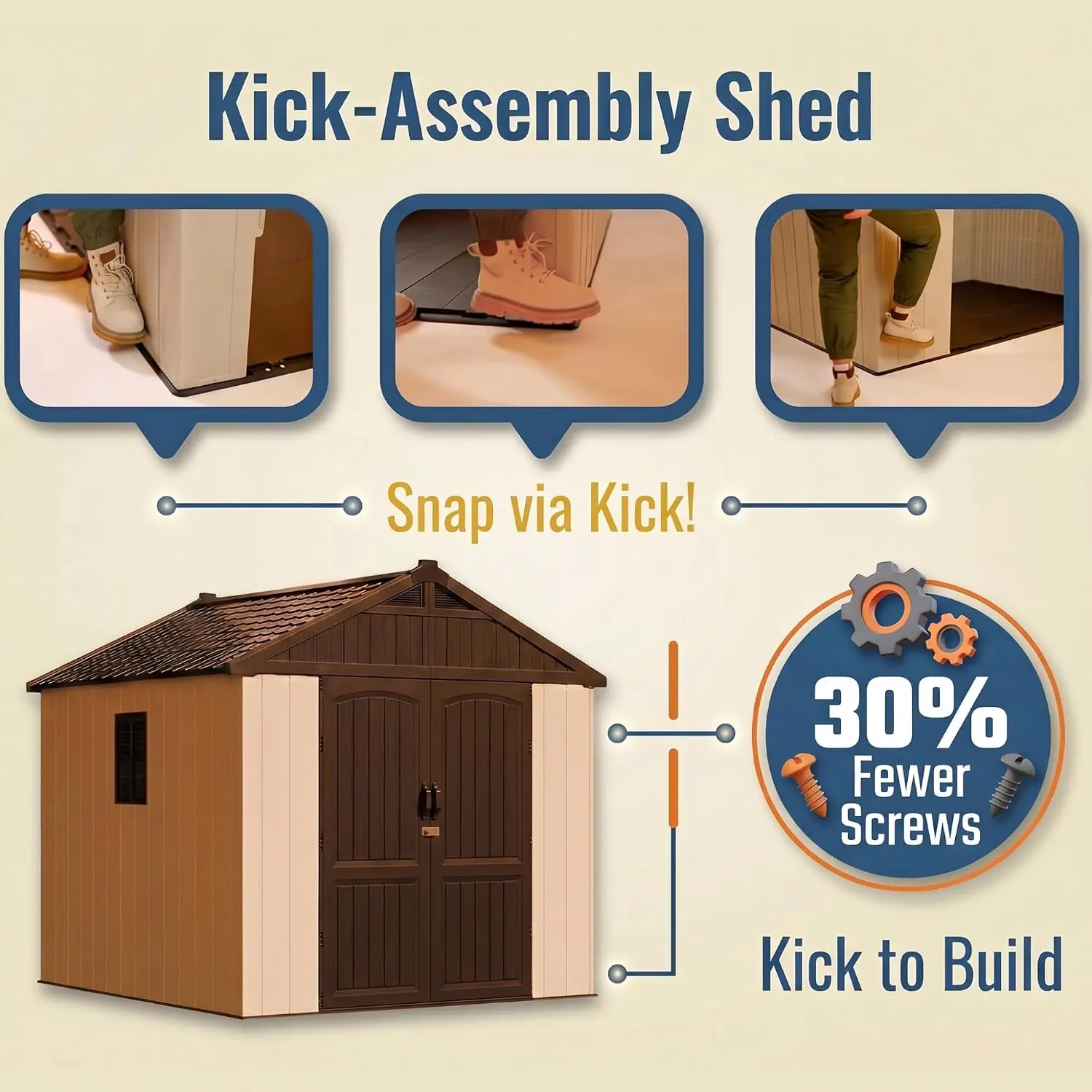
The key engineering choice here is the “Kick-It” wall system. Unlike traditional panel-and-frame assembly, Devoko uses interlocking wall sections that snap into the base. This is a deliberate design trade-off. It accelerates assembly of the shell, but the resulting wall structure has less inherent rigidity than a full steel-framed resin shed. For the asking price, this trade-off is reasonable, provided you come into it with eyes open about what you gain and what you yield. You can read more about Devoko’s approach on their official website.
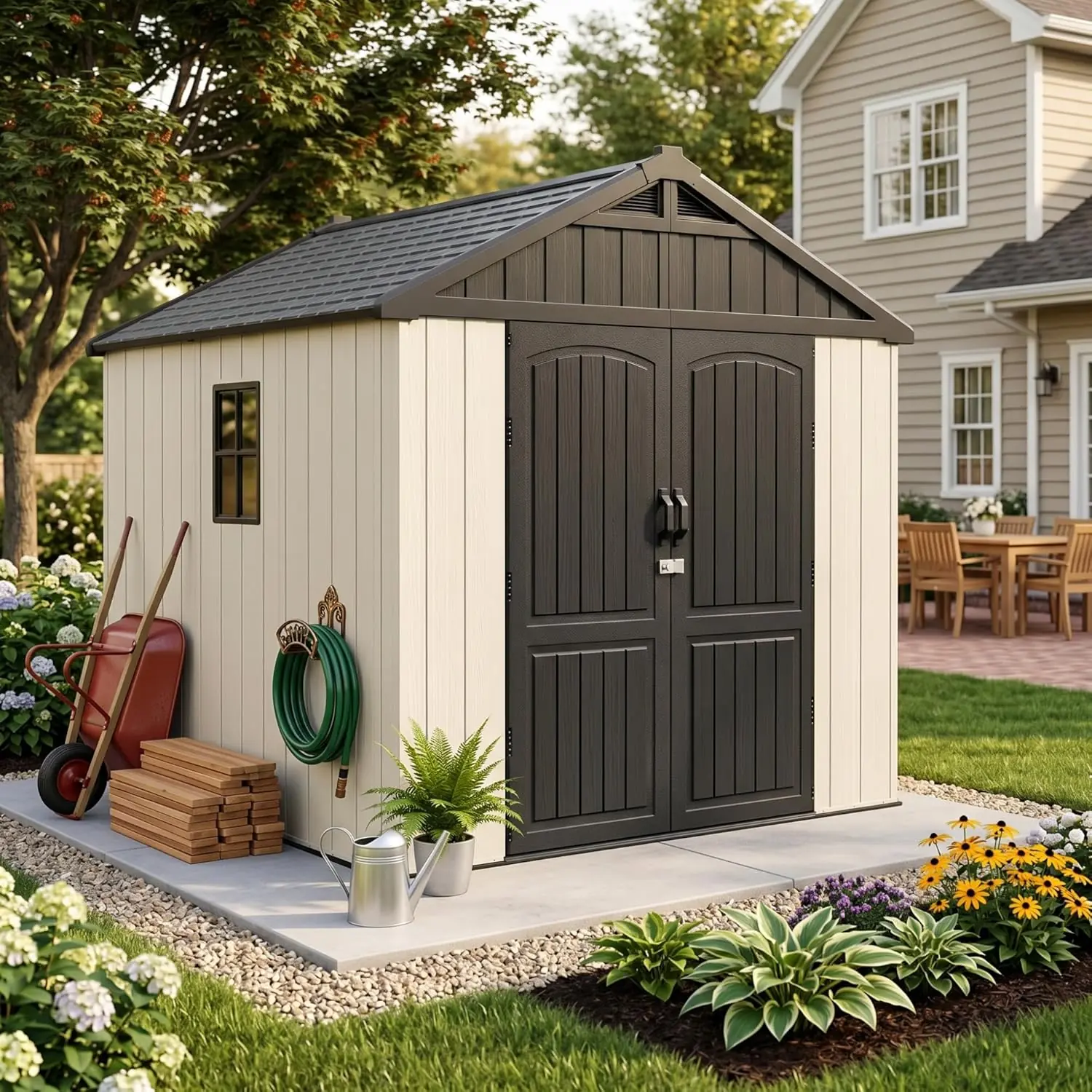
The shed arrives in six separate boxes. Two of the boxes are very heavy, containing the metal floor frame, and the rest hold the resin wall panels, roof panels, and hardware. Expect a shipping schedule where packages arrive over a day or two — this is normal for large resin sheds, but worth noting so you do not panic if the first box arrives alone.
Packaging quality is adequate. The corrugated cardboard is thick, and the panels are nested with foam edge protectors. I found one corner panel with a minor scuff; being plastic, it did not crack, but the scratch is visible if you look closely. The hardware bag is well-organized, though the manual is printed very small. I recommend downloading the PDF version from the listing to read details on your phone screen.
First physical impression of the panels is that they feel denser than the typical resin used in the cheapest sheds on Amazon. The wall panels have a textured wood-grain finish that looks decent at a distance but feels undeniably like plastic up close. The floor frame is powder-coated steel, which adds crucial rigidity. Notably absent from the box is a padlock for the locking mechanism — the shed can accept one, but you must provide your own. This is a standard omission in this price range, but it is worth factoring into your first trip to the hardware store.
I scheduled assembly on a Saturday morning with a helper. The first step is assembling the floor frame on a level gravel pad. This is the most critical part of the entire build — if the floor is not square and level, the wall panels will not align properly. The “Kick-It” system works exactly as described for the side walls: you align the bottom of the panel with the floor channel and kick it into place. It is genuinely satisfying. However, the sliding door track required a lot of patience to adjust because the door panels bind if the track is not perfectly straight. After about five hours of total work, the shell was up. The sloped roof panels fit cleanly, and the integrated skylight strips let in enough light to see inside without opening the door.
During the first week, we had a three-day stretch of rain. I checked the interior several times. The floor stayed completely dry. The roof seals, which are essentially overlapping plastic panels with a rubber gasket, did their job. No drips. The sliding door also performed well, though the latch alignment required a minor adjustment on day three as the resin panels settled into position. My initial impression was that the shed would be more than adequate for storing the lawn mower, leaf blower, and garden tools. The one thing that became apparent quickly is that the walls have a hollow sound when bumped — it does not feel as solid as a wood shed, but it does not feel flimsy either.
Week three brought a thunderstorm with sustained winds around 45 miles per hour and gusts higher. I was genuinely concerned about the large wall panels flexing. I watched the shed from the house window during the worst of it. The walls did flex inward slightly under the heaviest gusts, and the whole structure creaked. Nothing broke. The shed held its position because I had anchored it to the ground using the included auger anchors. This experience confirmed something important: anchoring is not optional with this shed. If you plan to put it on a concrete pad without bolting it down, or on bare ground without anchors, you are making a mistake. The structure needs to be tied down to perform safely in wind.
After three months of direct sun exposure, I noticed the beige color had faded slightly, particularly on the door panels that face west and catch the afternoon sun. The fading is uniform and not drastic, but it is noticeable if you look at a hidden area versus an exposed one. The sliding door track developed a bit of resistance from dust and grit buildup, which a spray of silicone lubricant fixed immediately. The floor panels, which are a composite material over the steel frame, show no signs of sagging or moisture damage. The honest opinion I developed over time is that this is a solid, mid-tier solution. The initial enthusiasm for the quick assembly settled into a practical appreciation for having a dry, organized space that requires zero maintenance.
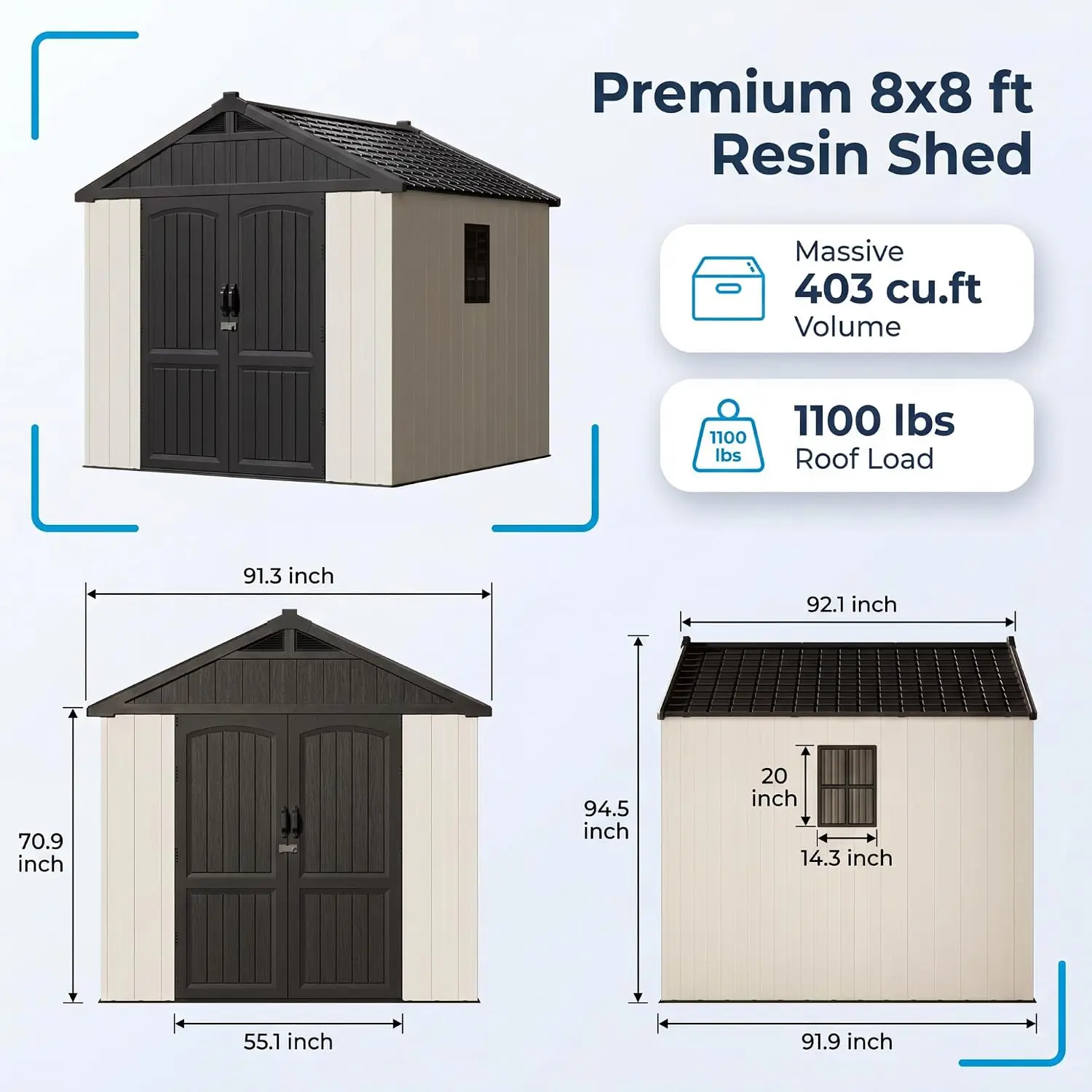
| Specification | Value |
|---|---|
| Product Dimensions | 91.9D x 91.3W x 94.5H inches |
| Item Weight | 357.5 Pounds |
| Floor Area | 58.3 Square Feet |
| Door Dimensions | 55.1 W x 70.9 H inches |
| Material | Resin Plastic / Steel Frame |
| Weight Capacity | 1100 Pounds |
| Door Style | Sliding Door |
| UV Protection | Yes |
Every product is a set of trade-offs. The Devoko 8×8 makes specific choices to hit its price point. Here is what it does well and where you will feel the compromises.
These compromises are typical for a resin shed at this price point. Devoko prioritized quick assembly, a low-maintenance material, and an inclusive floor over absolute structural rigidity and premium weather sealing. For the weekend gardener who needs a dry place for tools and a mower, that was the right call. For someone storing valuable workshop equipment in an exposed field, it may not be.
The resin shed market is crowded. This Devoko storage shed review would not be complete without assessing how it stacks up against the dominant players in the same size category. Below are three realistic alternatives.
| Product | Price Range | Key Strength | Key Weakness | Best For |
|---|---|---|---|---|
| Devoko 8×8 | ~$1,000 | Integrated floor, fast Kick-It assembly | Panel flex, basic door seal | Budget-conscious buyers wanting a floor |
| Keter Factor 8×6 | ~$1,300 | Thicker resin panels, stronger door mechanism | Smaller footprint, no floor included | Buyers wanting a sturdier shell |
| Suncast 8×7 | ~$1,100 | Better warranty, reputable brand | Assembly is more complex, no floor | First-time buyers wanting brand reliability |
Choose the Devoko if the integrated floor is a priority for you. Building a wooden floor for a Keter or Suncast adds significant cost and labor. If you are placing the shed on gravel or grass, having a pre-engineered floor that keeps your mower and tools dry and off the ground is a strong advantage. The assembly time is also genuinely faster, which matters if you are working alone or have limited patience for complex builds. For someone like me replacing a rusted metal shed, the Devoko solved the exact problem I had.
Spend the extra money on a Keter Factor or Suncast if panel rigidity and long-term brand support are your primary concerns. The Keter’s resin is noticeably stiffer, and the sliding door track is more tolerant of imperfections in the base. If you live in an area with frequent high winds or heavy snow, the thicker walls and stronger roof supports of those units will justify the higher cost. You can also explore a fully metal-reinforced option like the Aoxun Metal Storage Shed if absolute rigidity is your main goal over rust resistance.
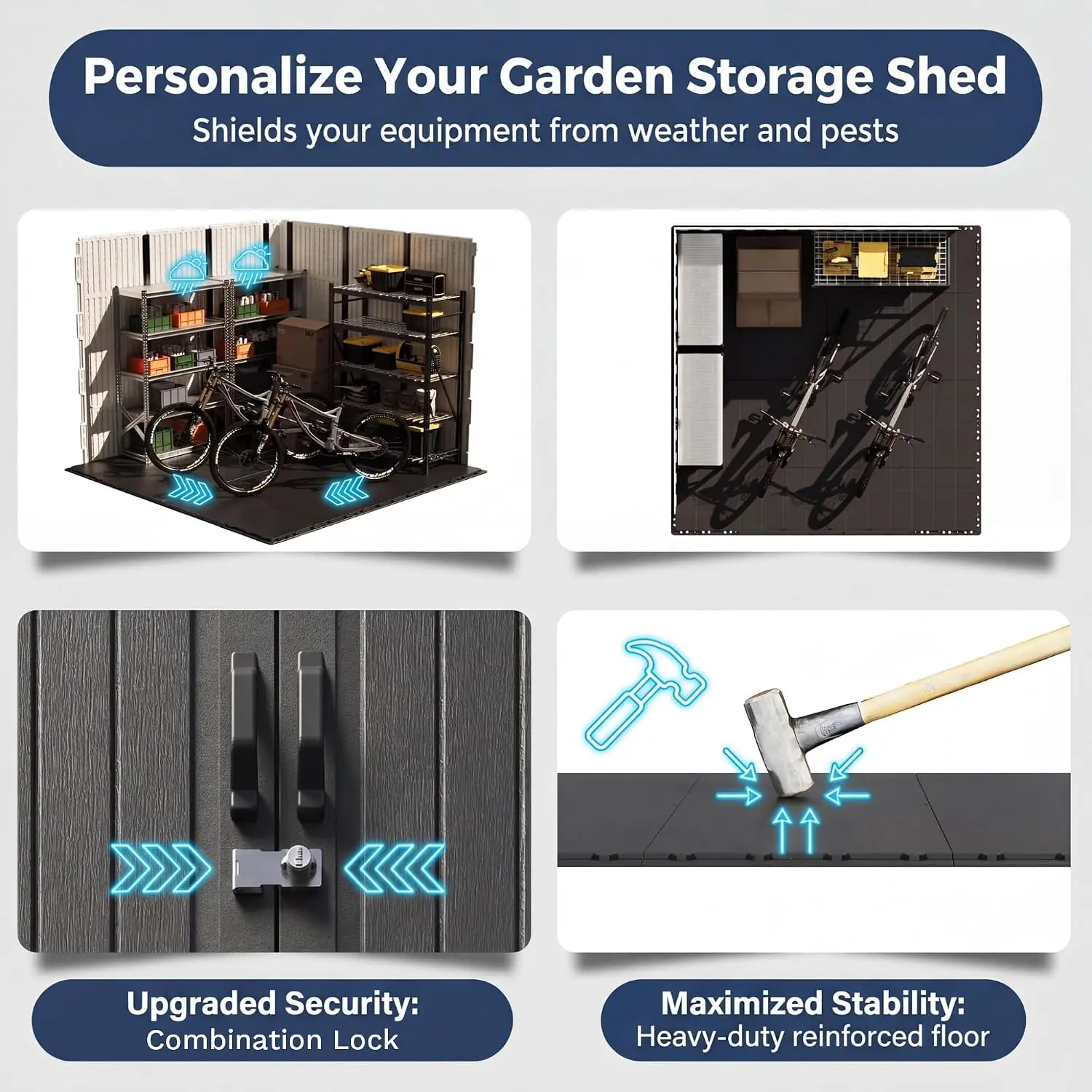
I recommend allocating a full weekend for the build, even though the box says it can be done in a few hours. The floor frame assembly is straightforward, but it requires a perfectly level surface. I spent half a day preparing the gravel base before the shed went up. The manual provides exploded diagrams but very little written guidance. Start by sorting the six boxes by the labels stamped on the outside — do not open all of them at once. Trust the Kick-It system for the walls, but use a rubber mallet to tap stubborn panels rather than kicking too hard, which can crack the resin. The one thing most people skip is pre-drilling the floor frame holes for the anchors. Do not skip this. Drill them before you assemble the floor to avoid cracking the plastic.
Over the past three months, I developed a few habits that I wish I had known from day one. Here they are:
Self-selection is the most honest part of any review. Here is a clear breakdown of who should buy this shed and who will regret it.
The listed price of 999.99USD positions this shed at the higher end of the budget category and the lower end of the mid-range category. This is the price neighborhood where buyers weigh the cost of a resin shed against building a custom wooden structure. For that money, you are buying convenience: no painting, no rot, no treating wood. You are also buying an integrated floor, which would cost at least $100-$200 to build yourself for a competitor’s shed.
I consider this fair value for a shed that will last several years without major maintenance. It is not a deal. It is a fair price for what you get. Cheaper resin sheds exist, but they lack the floor and the Kick-It system. More expensive options from Keter and Suncast offer better rigidity and warranty support, but they also require you to source or build a floor separately.
The safest place to buy is through a major online retailer with a clear return policy. Avoid grey-market sellers on third-party marketplaces that offer steep discounts but no warranty support.
Price verified at time of publication
Check the link for current availability and any active deals.
Devoko offers a limited 1-year warranty against manufacturing defects. This is standard for the price point. Keter, by comparison, typically offers a 5-year warranty on their resin sheds. The shorter warranty window is something to factor in. Support is handled through the Amazon seller portal or directly through Devoko’s customer service. I have not needed to test the support system myself, but user reports suggest response times vary. The warranty specifically excludes damage from improper assembly, acts of nature, and normal wear and tear. Keep your packaging materials and receipt until the shed is fully assembled and inspected.
After three months of consistent use, this Devoko storage shed review verdict is that it meets its design brief effectively. It provides a dry, low-maintenance storage space that solves the rust and rot issues inherent to metal and wood sheds. The integrated floor and quick assembly are the standout features that justify its position in the market. The primary limitations are the flexible panels and a door track that requires precise leveling to function smoothly.
It is worth buying if your primary needs are a dry space for standard lawn and garden equipment and you want to avoid the ongoing maintenance of wood or the rust problems of metal. I would give it a solid 4 out of 5, docking one point for the wall flex under wind and the lack of a weather-tight door seal. If you read this Devoko storage shed review pros cons list and the trade-offs sound manageable for your situation, it is a smart purchase at the current price.
If you own a Devoko shed, I want to know how it held up through your first winter or whether you found a workaround for the door seal. Drop a comment below with your experience. It helps other readers get a balanced view. In the meantime, you can check the latest price here to see if it fits your budget today.
For the asking price, the Devoko delivers good value specifically because of the integrated floor and the faster Kick-It assembly. You are paying about $1,000 for a turnkey resin structure that does not require a separate concrete pad or wooden floor. Compared to building a wood shed from scratch, it is a time and labor saver. Compared to other resin sheds without floors, it saves you the cost and hassle of building your own.
The Keter Factor uses a denser, more rigid resin compound and has a better reputation for door track reliability. However, the Keter does not include a floor, and its footprint is slightly smaller. If you value structural stiffness and a longer warranty, get the Keter. If you want a larger footprint with a floor included and accept a bit more panel flex, the Devoko is the honest choice.
It is one of the easier large resin sheds to assemble thanks to the Kick-It wall system, but it still takes a full day. The hardest part is getting the floor perfectly level. If you have never assembled a shed before, plan for 6-8 hours total with two people. The manual is sparse, but the QR code on the box links to a helpful video walkthrough.
You will need a level, a rubber mallet, a drill, a socket set, silicone lubricant for the door track, and a padlock for the door. For the base, you need either a leveled gravel pad or a concrete slab. I also recommend buying heavier-duty ground anchors than the ones included if you live in a windy area. You can find a good set of anchors at any hardware store.
The warranty covers manufacturing defects for 1 year. It does not cover damage from improper assembly, weather events, or normal wear and tear. Customer support is handled through the seller. Response times have been reported as mixed, with some users getting quick replacements for damaged panels and others experiencing delays.
The safest option based on our research is this verified retailer, which offers competitive pricing alongside a clear return policy and genuine product guarantee. Avoid third-party resellers offering prices significantly lower than the standard rate, as warranty support is often compromised.
The sloped roof is designed to shed snow, but the roof panels are resin and can flex under heavy weight. If you live in an area with frequent heavy snow, you will need to manually clear the roof after significant storms. The structure is not rated for extreme snow loads, unlike some steel-framed or wooden alternatives.
The floor uses a powder-coated steel frame with composite resin panels on top. In my three months of testing, it showed no signs of warping or sagging, even under the weight of a riding mower. The steel frame is the key structural element here. As long as the base is level, the floor should remain stable for many years.
Reviews You Can Actually Use
We test products so you do not have to guess. No sponsored rankings. No filler content. Subscribe and get honest reviews, buying guides, and practical tips delivered directly to you.