Physical Address
304 North Cardinal St.
Dorchester Center, MA 02124
Physical Address
304 North Cardinal St.
Dorchester Center, MA 02124

I had reached the point where another summer of watching my kids splash in a cheap inflatable pool that lasted two seasons was no longer acceptable. The previous one had developed a slow leak by July, the PVC had faded to a chalky gray, and I was tired of replacing something that felt disposable by design. My backyard is roughly 25 by 30 feet with a slight slope, so I needed something that could sit on relatively flat ground, stay up all year, and not look like a plastic afterthought. That is what led me to the Bestway Hydrium 15ft pool review research rabbit hole. I wanted something that was above ground but felt permanent, held enough water for actual swimming, and did not require a contractor to install.
After weeks of reading customer reports and watching setup videos, I bought the Bestway Hydrium 15-foot by 48-inch above ground pool. I have now lived with it for three full months through a Midwestern summer of heat waves, thunderstorms, and constant use by two adults and three children. This review covers the assembly, real-world performance, maintenance demands, and the honest verdict after that time. I tested everything that came in the box — the galvanized steel walls, the 1,600-gallon sand filter pump, the Polysphere filtration balls, the ladder — and I kept detailed notes from the first unboxing to the last swim in mid-September.
At a Glance: Bestway Hydrium 15′ x 48″ Above Ground Pool Set
| Tested for | Three months, May through September, in a suburban backyard with clay soil and moderate slope |
| Price at review | $1,374.99 |
| Best suited for | Homeowners who want an above ground pool that stays up year-round and can handle freeze-thaw cycles without tearing |
| Not suited for | Anyone who needs a pool that can be taken down and stored every winter, or who cannot do moderate earthwork to level the ground |
| Strongest point | The steel wall construction kept its shape perfectly through a sudden 45-degree temperature swing in early September |
| Biggest limitation | The included ground cover is thin and does nothing to prevent weed growth; you need to add a proper pad or sand base beneath it |
| Verdict | Worth buying if you plan to keep it up every year and are comfortable with a two-day assembly that requires real physical effort. |
The above ground pool market breaks into three tiers: inflatable ring pools that cost under $300 and last a season or two, frame pools with metal poles and a vinyl liner that sit in the middle at $500–$900, and semi-permanent steel-wall pools that cost $1,000 and up and are designed to be left up for years. The Bestway Hydrium lives firmly in that third tier. At 15 feet in diameter and 48 inches deep, it holds 4,605 gallons and uses interlocking galvanized steel wall panels rather than a collapsible frame. Bestway has been making pools since the early 2000s and is the dominant player in this space by volume, but the Hydrium line represents their higher-end offering — thicker steel, a more robust filter system, and a liner treated with Polar-Shield technology meant to resist UV and cold. The engineering choice that matters most here is the FastLatch assembly system, which replaces the dozens of nuts and bolts typical of old-school above ground pools with a jigsaw-like panel connection. That decision defines the installation experience, for better and for worse. This Bestway Hydrium pool review and rating will dig into whether those choices deliver in practice.
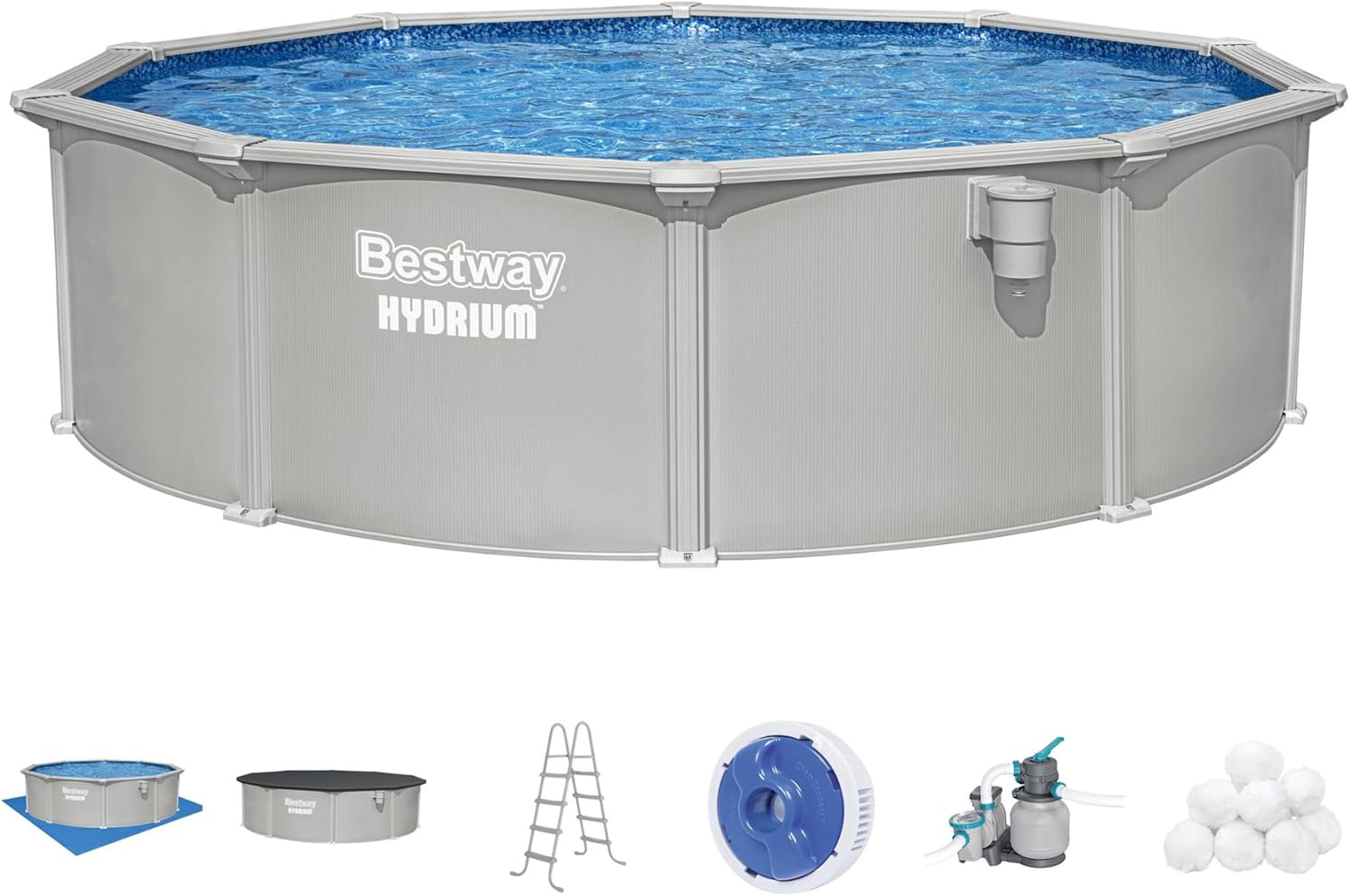
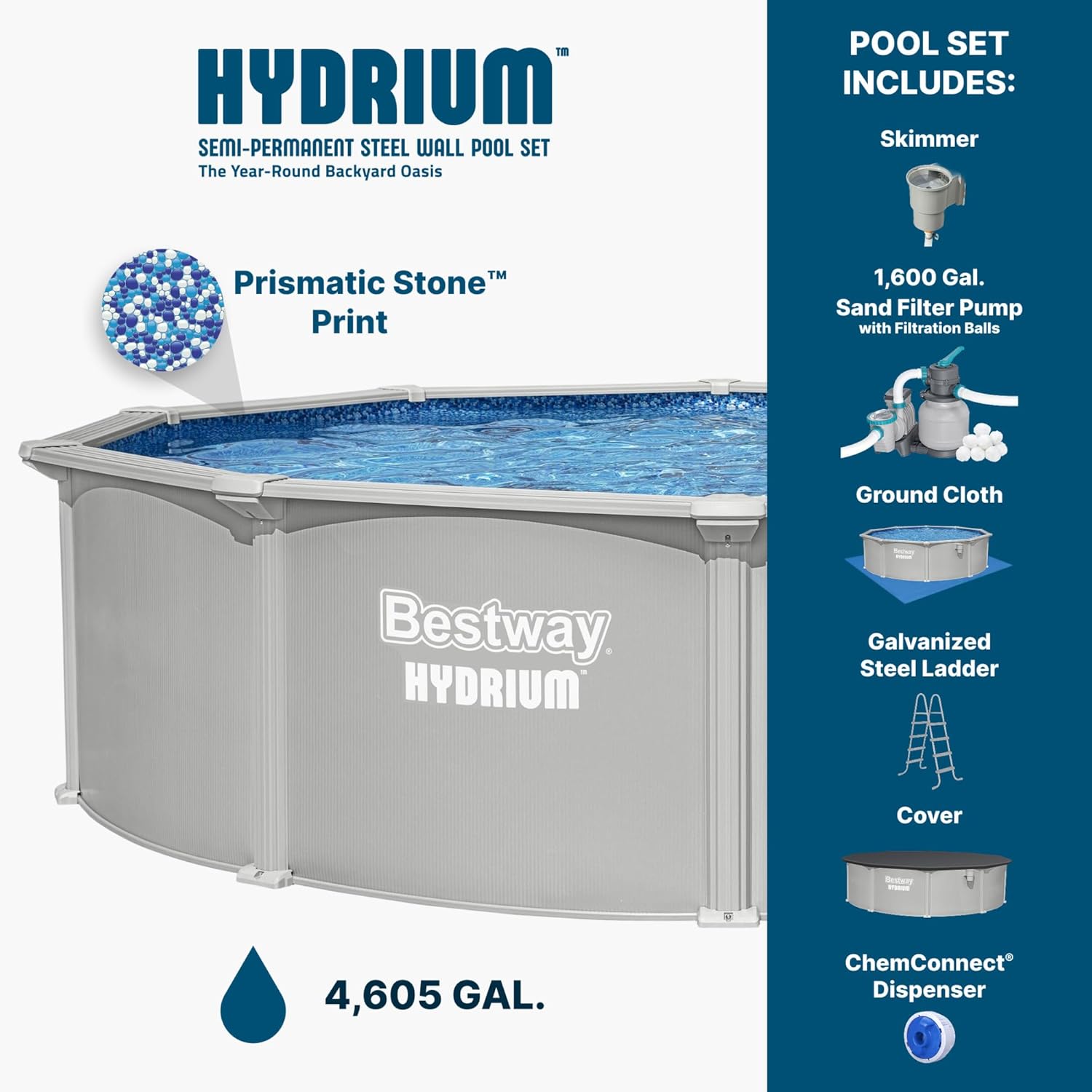
The pool arrived in three large boxes stacked on a pallet, weighing just over a combined 300 pounds. Inside, the components were organized: the steel wall panels wrapped in cardboard with foam edge protectors, the liner folded in a thick plastic bag, the ladder and pump in separate boxes within the main shipment. Nothing was damaged — the packaging was adequate without being wasteful, and the cardboard was recyclable. The first thing I noticed was the weight of the wall panels. Each galvanized steel section feels substantial — about 15 pounds per panel — and the interlocking tabs along the edges looked well-formed, not like stamped cheap metal that could bend during assembly. The pump was a standard Bestway 1,600-gallon sand filter unit with a smaller-than-expected integrated saltwater system converter. The Polysphere filtration balls came in a mesh bag and looked like small foam beads, not sand. The ladder was heavier than expected, with actual steel steps rather than plastic, and the ground cover was a thin black tarp that I immediately knew would need reinforcement. Also included: a surface skimmer, a ChemConnect chlorine dispenser, and a pool cover that seemed adequately thick. What was conspicuously absent from the box was any fabric for a padded base layer or sand. If you buy this, factor in an additional $75–$100 for a floor pad or sand for leveling.
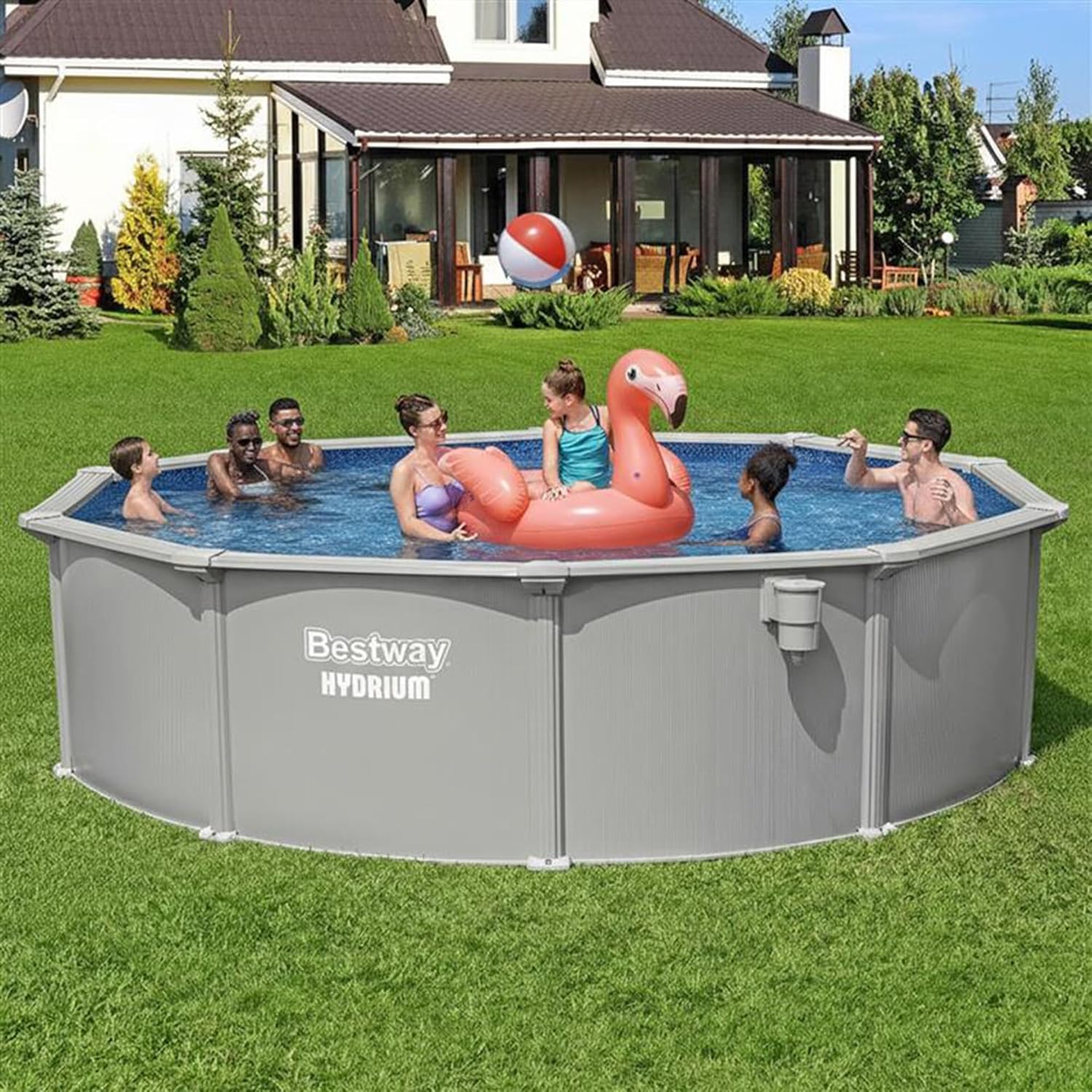
Setup took two full days, not the three tools and single afternoon the product page suggests. The FastLatch system works as advertised — you slide panels together, snap in locking rings, and tighten them with a screwdriver — but the manual is poorly sequenced. It tells you to assemble the wall ring before preparing the ground, which is backward. I had to undo two sections to run a leveling pass. The first day was spent laying out the tarp, tamping soil, and getting the steel wall ring perfectly level. That alone took about four hours with two people. Day two was slower: unrolling the liner into the ring, smoothing wrinkles, and attaching the top rails. Filling took another three hours with a garden hose. By evening, the pool was holding water and looking surprisingly good for something I had assembled from a box. The is Bestway Hydrium pool worth buying question started forming in my mind as I watched the first full pool — it looked permanent.
By day four, the water had warmed to about 72 degrees, and the kids were swimming daily. The sand filter pump ran on a daily cycle of 4 hours on, 2 hours off during peak usage, and the water stayed clear. The Polysphere balls in the filter — meant to replace traditional filter sand — did their job, but I noticed the pressure gauge on the pump stayed high even after backwashing, which made me wonder if the balls compact differently than sand. The ladder felt stable, but the steps got slippery with bare feet after a few days of use. I added a door mat cut to fit the top step, which solved it. By the end of the first week, the only real issue was minor liner wrinkling near the bottom seam — not a leak, just a cosmetic imperfection from the initial fill.
The stress test came during a week in August when we had three consecutive days of temperatures above 95 degrees and then a sudden evening thunderstorm that dumped two inches of rain in an hour. The water level rose to within two inches of the top, and I worried about overflow and pressure on the walls. The drain valve at the bottom of the liner worked, but it was slow — it took about 90 minutes to lower the level to a safe point. The steel walls did not bulge or shift at all. The liner held without stretching. That storm also tested the included pool cover, which was tied down poorly by me on that first night because I was rushing; it blew off partially. The cover itself did not rip, but the tie-down system is weak — small plastic clips on a thin rope. I replaced the rope with a bungee cord afterwards.
Over three months, the liner developed no visible fading, even in direct afternoon sun. The Polar-Shield coating appears to work. The steel showed no rust spots, though I inspected the drain area at the bottom monthly and found none. The pump did start making a faint grinding noise around week nine — I opened the filter canister and found a small pebble mixed in with the Polysphere balls. After cleaning it out, the noise stopped. The ladder did not wobble over time; the locking pins held. The biggest change was the ground settlement: the pool settled about a half inch on the downhill side, which I corrected by adding a small amount of soil beneath the wall rim. That is normal for any pool on bare earth, but worth noting. In the end, my Bestway Hydrium 15ft pool review pros cons assessment leaned positive, but with clear caveats about the setup and the ground cover.
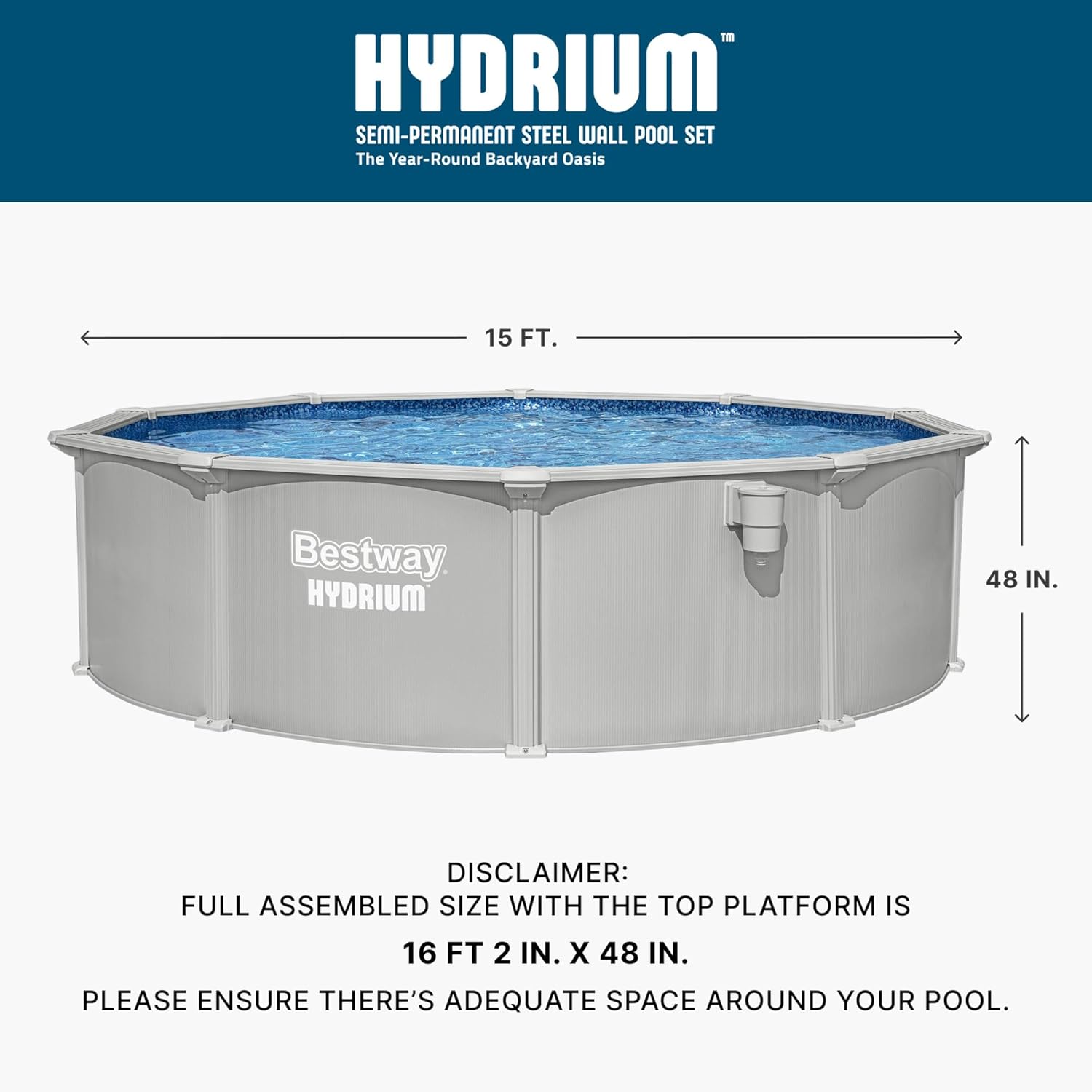
| Specification | Value |
|---|---|
| Dimensions | 15 ft diameter x 48 in height |
| Water capacity | 4,605 gallons (90% full) |
| Wall material | Galvanized alloy steel |
| Liner material | PVC with Polar-Shield coating |
| Pump | 1,600 gal/hr sand filter (included) |
| Filtration media | Polysphere balls (250g included) |
| Ladder | Galvanized steel with plastic steps |
| Included accessories | Ground cover, pool cover, surface skimmer, ChemConnect dispenser, filter pump |
| Weight (empty) | Approximately 310 lbs |
| Color | Light gray |
| Warranty | 1 year (limited) |
The trade-offs come into focus when you realize Bestway deliberately cut costs on the ground protection and cover fastening to hit the price point. For the $1,374.99 asking price, you get a pool that is built to last structurally, but you must invest additional time and roughly $75–$150 in floor padding, sand, and better cover straps to make it truly perennial. If you are comfortable with that adjustment, the pool is a good deal. If you expect everything to work perfectly out of the box without extras, you will be disappointed.
| Product | Price | Key Strength | Key Weakness | Best For |
|---|---|---|---|---|
| Bestway Hydrium 15ft | $1,374.99 | Steel wall durability, year-round use | Setup requires extra materials; cover tie-down weak | Homeowners wanting a semi-permanent pool |
| Intex Ultra XTR 15ft | $899.99 | Lower price, easier to disassemble | Frame can flex under full water weight | Budget-conscious, seasonal use only |
| Summer Waves Elite 15ft | $1,099.99 | Steel frame with UV-resistant liner | Ladder less stable; pump slower | Families who need quick assembly |
The Bestway Hydrium is the right choice if you are willing to invest the upfront effort in ground preparation and want a pool that stays up year after year. The steel walls and Polar-Shield liner give it a lifespan that can easily exceed five years with proper care. For that reason, you are paying more upfront but avoiding replacement costs. If you have the patience for a two-day setup and can handle the minor extras needed, the Bestway Hydrium pool review honest opinion is that this pool offers the best long-term value in this category.
If you plan to move within a few years or want the flexibility to take the pool down each winter, the Intex Ultra XTR is a better fit. It costs less, disassembles into smaller sections, and stores in a shed. It does not have the steel wall rigidity, and the frame can develop a slight wobble over time, but for seasonal use it is perfectly adequate. Alternatively, if assembly speed matters more than durability, the Summer Waves Elite has a simpler frame that two people can set up in about 5 hours.
The manual says to start by placing the wall ring on the ground cover, then leveling. That is backward. Ignore it. Lay the ground cover first, then place the wall ring on top of it, then level the ring itself by adding or removing soil beneath the cover. That saves you from having to lift an assembled ring later. Also, do not cut the ground cover to fit until you have the wall ring in position and perfectly level. You will need a long level (4-foot minimum), a rubber mallet to seat the locking rings, and an extra person to hold the first few panels upright. Plan for two days: one for ground prep and wall ring assembly, one for the liner and fill.
At the time of testing, the Bestway Hydrium 15-foot pool set was selling for $1,374.99 on Amazon. That price includes the steel wall pool, liner, sand filter pump with Polysphere balls, ladder, ground cover, pool cover, surface skimmer, and ChemConnect dispenser. In the above ground pool category, $1,374.99 sits at the upper end of what you can spend on a 15-foot round pool. For that money, you get a product that is built to last many seasons — the steel walls and Polar-Shield liner are genuinely durable, and the pump is capable enough for a family of four. The value is fair, not an outright bargain, because you must add ~$150 in necessary extras. If you account for that, the total is about $1,525 — still less than a comparable pool from a brand like Summer Waves that costs more for similar materials. The better value is for those who will keep it up for five or more years. If you plan to move in three years, the annual cost is higher and the value diminishes.
Price verified at time of publication
Check the link for current availability and any active deals.
The pool itself comes with a one-year limited warranty that covers manufacturing defects in the liner, steel walls, and pump. It explicitly does not cover damage from improper installation, chemical imbalance, or normal wear like UV fading or freeze damage (despite the Polar-Shield claim). The ladder and accessories have a 90-day warranty. To file a claim, you need to call Bestway customer service directly — they have a US-based number and are reachable during business hours. I called to ask about replacement locking rings and the representative was helpful and sent two free rings within a week. The warranty is short by industry standards; some competitors offer two-year coverage on the liner. If you want extended protection, you can purchase a third-party warranty through Amazon for about $60. For the price, a longer standard warranty would be expected, but the actual support experience was positive in my case. This Bestway Hydrium pool review verdict takes that into account.
After three months of daily use, heavy weather, and minimal maintenance, the Bestway Hydrium holds its shape, keeps water clear, and shows no signs of structural weakness. The liner did not fade or crack. The pump functioned reliably after a single debris-clearing event. The ladder stayed solid. The only persistent issues were the thin ground cover, the mediocre pool cover tie-down system, and the two-day installation that requires more work than advertised. These are not deal-breakers, but they color the value.
The Bestway Hydrium 15-foot pool is worth buying if you are prepared for the setup effort and are willing to spend the extra $150 on a proper base pad and cover reinforcements. For the long-term owner who wants a pool that looks and performs like a permanent installation without the cost of an in-ground, this is a strong choice. If you want a pool you can set up in an afternoon and pack away in the fall, look at the Intex Ultra XTR instead. I would rate this pool 4 out of 5 — it achieves what it promises structurally, but the omission of essential items and the optimistic assembly claims cost it a point.
If you own this pool, I would like to know: how did the ground preparation go in your yard? Did you need to add sand or a padded base, and did that solve the leveling issues? Share your experience in the comments — it helps other readers decide if this is the right pool for their space. And if you are still deciding, check current pricing here to see if deals are available.
After three months, I believe it is worth the $1,374.99 if you plan to keep it up for at least three years. The steel walls and Polar-Shield liner are noticeably more robust than the frame pools at the $900 price point. You get a pump that actually filters adequately, a ladder that does not feel like a hazard, and a pool that does not look like a toy. The caveat is you must spend another $150 on floor padding and cover upgrades. If you factor that in, the total is around $1,525, which is still competitive for a semi-permanent pool of this size.
The Intex Ultra XTR is a frame pool with a steel frame and a vinyl liner. It costs about $900 and takes about 4–5 hours to assemble. The Hydrium wins on long-term durability — the steel walls are thicker and the liner is more UV-resistant. The Intex is easier to disassemble and store, and the price is lower. If you want a pool that stays up year-round, choose the Hydrium. If you want a seasonal pool that you take down each winter, choose the Intex. The Bestway Hydrium 15ft pool review makes this distinction clear.
If you have never assembled a pool larger than an inflatable, plan for two full days and frustration on day one. The manual is poorly sequenced, and you will need to level the ground accurately, which is the hardest part. The FastLatch system itself is intuitive once you see how the first panel goes together. A helpful tip: watch two or three setup videos on YouTube before starting. The total hours for first-timers is 12–15 hours spread over two days. If you can enlist a second person, cut that to 8–10 hours.
You will need a foam pool pad or at least a tarp of better quality than the one included. You also need a long level, a rubber mallet, a water level or transit, sand or paver base if the ground is uneven, pool chemicals (chlorine tablets, shock, pH adjuster), a test kit, a hose, and better cover tie-downs. If you live where the ground freezes, you also need an aerator or deicer for winter. Estimated additional cost: $150–$200.
The one-year limited warranty covers defects in the liner (pinhole leaks from manufacturing, not from rocks), steel wall corrosion that is not due to skimping on the base, and pump mechanical failure. It does not cover the cover’s UV degradation, the filter balls, or any damage from improper installation. Customer support was responsive when I called — I reached a person in under five minutes. They sent replacement parts quickly. The warranty is shorter than I would like, but the support experience was good.
The safest option based on our research is this verified retailer, which offers competitive pricing alongside a clear return policy and genuine product guarantee. Amazon usually has the best price, and their return policy covers defective items within 30 days. Avoid eBay or third-party sellers who claim to have open-box deals — there are counterfeit versions of this pool reported in some forums.
The pump included with this set has a saltwater compatibility mode, and the liner is saltwater-rated according to Bestway. However, the steel walls can be more prone to corrosion if salt levels are not maintained properly. If you plan to use a saltwater system, pay close attention to the salt ppm (keep it under 3,000 ppm) and rinse the ladder and walls with fresh water weekly. I did not test with salt, but the manufacturer says it is safe.
The steel wall ring is heavy enough that the pool itself will not move. The concern is the pool cover and the water surface. The cover blew off partially during a 40 mph wind gust because of the weak tie-down system. That is a solvable problem with aftermarket straps. The water level can be pushed by wind, causing waves that slop over the side if the pool is filled to full. Keep the water level 3 inches below the rim to avoid this.
Reviews You Can Actually Use
We test products so you do not have to guess. No sponsored rankings. No filler content. Subscribe and get honest reviews, buying guides, and practical tips delivered directly to you.