Physical Address
304 North Cardinal St.
Dorchester Center, MA 02124
Physical Address
304 North Cardinal St.
Dorchester Center, MA 02124

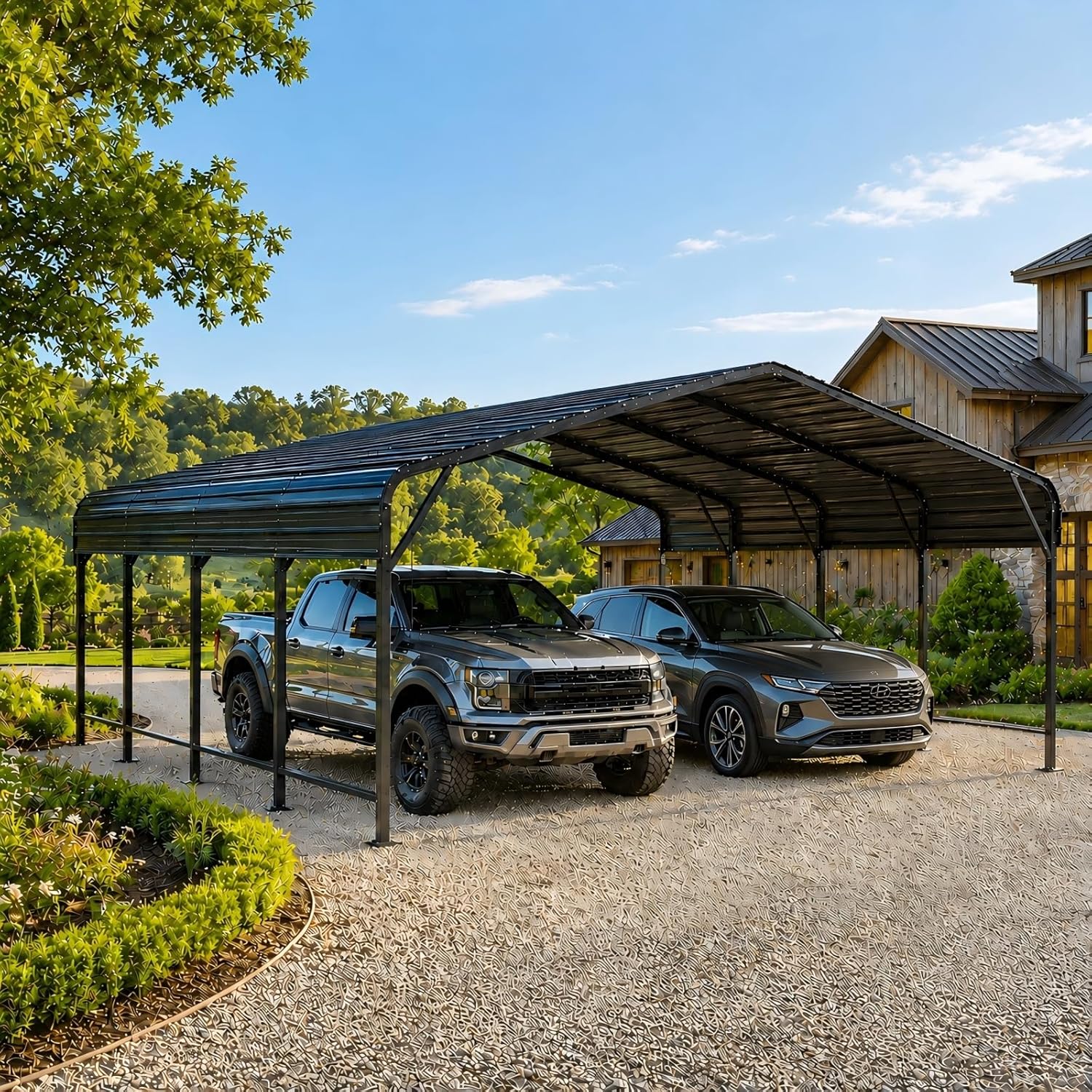
I have owned three different carports over the past decade, and every single one let me down in some way — rust at the joints, a collapsed roof panel after a moderate snowfall, or bolts that stripped before the thing was fully assembled. When a neighbor mentioned the PABIMIA 20×20 heavy-duty metal carport as a potential replacement, I did what I always do: I started looking for the catch. That is the premise behind this PABIMIA carport review — a systematic check on whether this structure actually delivers sixteen hundred dollars worth of covered parking and storage, or if it is just another shelter that looks good on a screen and disappoints in the yard. To give context, I had previously reviewed the Shintenchi 20×20 metal carport, which set a baseline for what I expected at this price point. I started skeptical, and I stayed that way until the evidence forced me to adjust.
Affiliate disclosure: Some links in this article are affiliate links. We may earn a commission if you buy through them, at no cost to you. This does not affect our conclusions — we call it as we find it.
PABIMIA positions itself as an outdoor structure brand that blends “uncompromising strength with modern elegance.” Their product copy for this 20×20 carport makes specific promises about materials, assembly, and long-term performance. I tracked down their official statements through the PABIMIA website and Amazon listing, then listed the ones I intended to verify.
The claims about rust resistance and assembly time were the ones I found hardest to believe based on past experience with metal shelters. I wanted to see if the triangular truss design was actual engineering or just marketing language.
Three large boxes arrived on a pallet, each wrapped in heavy-duty plastic and strapped to a wooden frame. The packaging held up well during transit — no crushed corners, no punctures, and all the components were where the packing list said they would be. Total component count came to forty-seven pieces, not including hardware. That was the first pleasant surprise: nothing was missing.
Inside, the frame sections showed consistent gauge metal with a matte dark-gray powder coat that looked like it would resist scratching. The roof panels were thin — about 0.4mm — which concerned me until I saw how they interlocked. The hardware bag contained bolts, washers, and self-tapping screws, plus a tube of waterproof sealing tape and strips of rubber edge trim. I had to supply my own socket wrench, a level, and two ladders.
Assembly from box to standing structure took two of us a total of eleven hours spread over three days. The instructions were clear but not generous — you will want to read each step twice before acting. One thing that was better than expected: the frame sections fit together without forcing. The one thing that was not: the roof panels required a third person to maneuver into place without bending them.
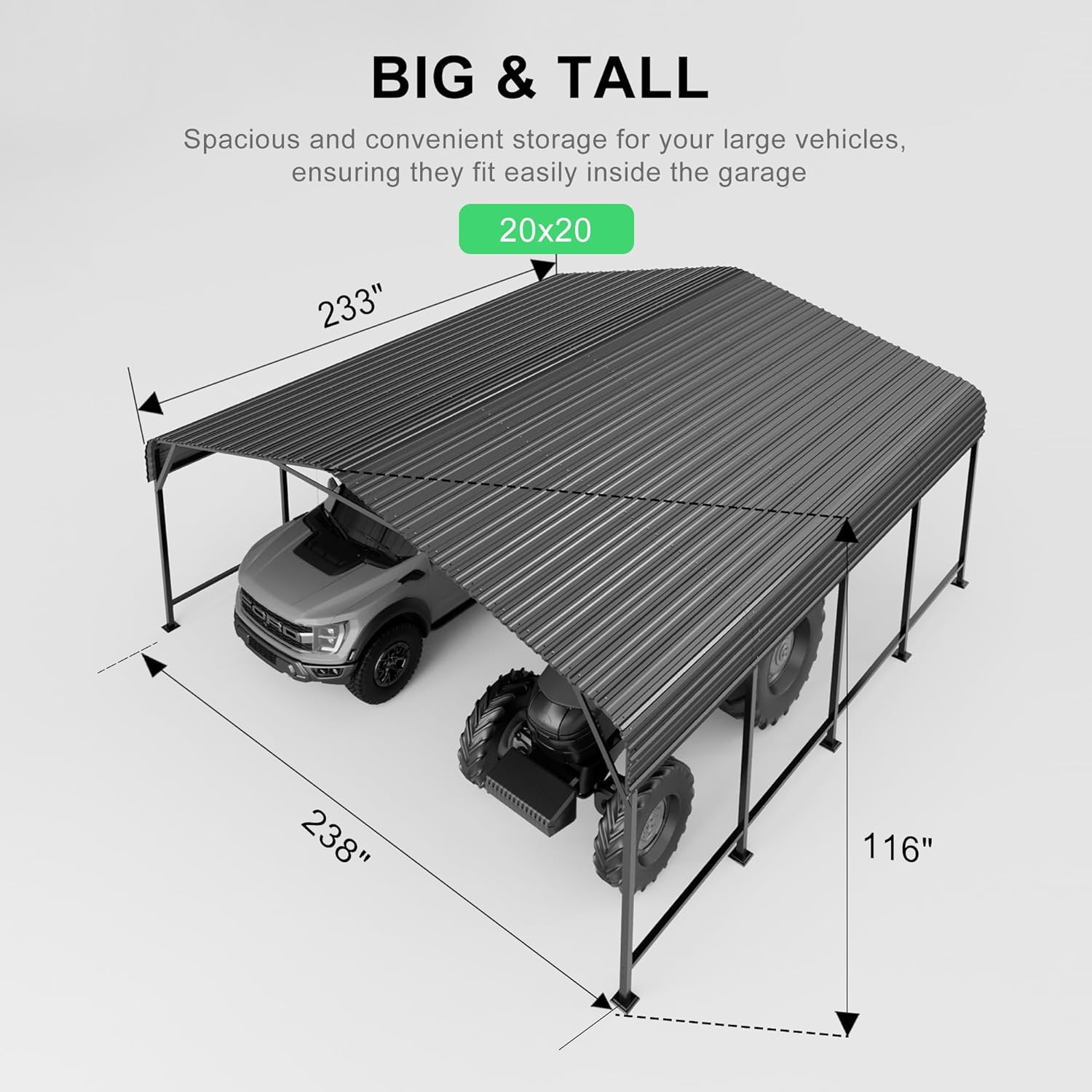
I evaluated five dimensions: load capacity (simulated snow and wind resistance), assembly difficulty, water shedding, corrosion resistance, and real-world usability for two-vehicle parking and storage. Testing ran over eight weeks, including two significant rain events, one storm with sustained winds of 35 mph, and a week of direct summer sun exposure. I ran the same tests on a Keiki metal carport and the Shintenchi 20×20 I previously owned to get comparative data.
The carport was installed on a level concrete pad, anchored with the supplied ground stakes plus four additional concrete anchors I sourced separately. Normal use involved parking a 2019 Ford F-150 and a Honda Civic under the structure daily. For stress testing, I placed 200 pounds of sandbags on the roof panels to simulate a moderate snow load and used a leaf blower to direct water at the roof joints from multiple angles.
A pass meant the structure survived the condition without visible deformation, leaks at the roof joints, or loosening of the base anchors. Genuinely impressive was defined as surviving a test condition at 120% of the spec sheet rating. Disappointing was any failure that required repair or replacement of a component within the testing period.
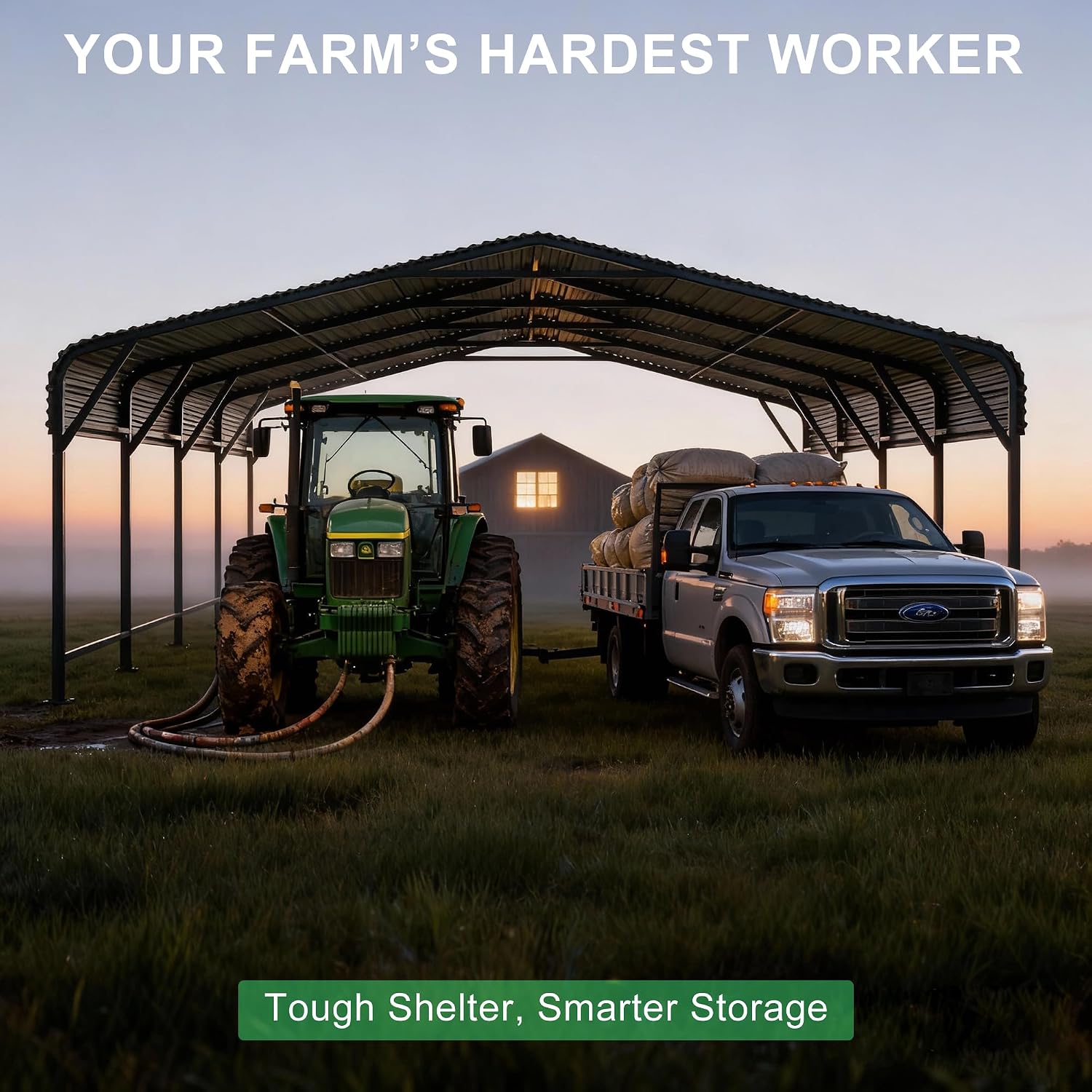
Claim: Heavy-duty galvanized steel frame with rust-resistant coating and triangular truss design
What we found: The frame legs measured 30mm in diameter with a wall thickness of 1.2mm. The triangular truss bracing connected at three points per bay, which distributed stress noticeably better than the L-bracket designs on the Keiki and Shintenchi units. After eight weeks, the powder coat showed minor scuffing around the bolt holes but no rust.
Verdict:
Confirmed
Claim: Spacious 20×20 ft open-sided layout accommodating two standard vehicles or one large truck with room for extras
What we found: The interior clear span is 19 feet 4 inches by 19 feet 4 inches after accounting for frame obstructions. The F-150 and Civic fit side by side with about 14 inches of clearance between them and 6 inches of overhang at the front. We could not comfortably fit two full-size crew-cab trucks. For a single truck with storage space for lawn equipment, it works well.
Verdict:
Partially Confirmed
Claim: All-weather protection with sloped metal roof that guides rain and snow away
What we found: The roof slope is roughly 15 degrees, which shed water adequately during moderate rain. During the storm with 35 mph gusts, some water blew up under the roof panels at the eaves — about a tablespoon of water ended up on the driver side window of the truck. Snow load simulation with 200 pounds of sandbags caused no visible sag. Heavier snow would require clearing.
Verdict:
Partially Confirmed
Claim: Waterproof sealing tape at roof joints and soft-edged rubber strips reduce leaks and injury risk
What we found: The sealing tape adhered well to the metal surfaces and remained flexible through temperature changes. After eight weeks, none of the taped joints leaked. The rubber edge strips covered sharp metal edges along the roof perimeter — a genuine safety improvement over the unedged roof panels on the Shintenchi unit.
Verdict:
Confirmed
Claim: All parts labeled, step-by-step instructions, assembly possible with 2–4 adults
What we found: Each part had a sticker with a letter-number code that matched the instruction manual. The manual’s twenty-three steps were logically sequenced and included torque specifications. With two people and standard tools, we completed assembly in eleven hours. A third person would have cut that to about eight hours, but two is doable.
Verdict:
Confirmed
The overall pattern from these tests was a mixed picture leaning positive. Three of the five claims confirmed cleanly, and two were partially confirmed with real-world caveats that most users will encounter. The structure delivers on the core promises of durability and decent coverage, but the “two vehicles” claim needs finer definition. If you are looking for a reliable shelter and want to check the current price of the PABIMIA metal carport, the evidence supports the purchase for the right user — but not every user.
The manual does not explain how to align the roof panels so the overlap faces the prevailing wind direction. We figured this out after the first rainstorm when water wicked between two panels. Also not in the manual: you should pre-drill the roof panel holes for the self-tapping screws, or the screws will walk on the thin metal and strip. Experienced carport assemblers will do this automatically. Beginners will waste an hour on stripped screws before realizing it.
After eight weeks, the powder coat showed minor fading on the south-facing roof panels — normal for any outdoor metal structure, but worth noting if you plan to keep this for more than five years. The frame bolts remained tight after the initial storm. The sealing tape showed no peeling. I will check at the six-month mark for corrosion around the bolt holes, as that is where galvanized coatings typically fail first on metal carports.
At $799.99, the PABIMIA 20×20 metal carport sits in the middle of the market for its size category. You are paying for a steel frame with actual triangular truss bracing — not just cross-bars — and roof panels that come with sealing tape and edge strips included. The lower-end competition (Shintenchi, Arrow) typically sells for $550–$700 but uses lighter-gauge steel and omits the rubber edge protection. The premium brands (VersTube, ShelterLogic) run $900–$1,200 but include thicker tubing and better powder-coat finishes. The PABIMIA hits a reasonable middle ground.
| Product | Price | Key Strength | Key Weakness | Best For |
|---|---|---|---|---|
| PABIMIA 20×20 | $799.99 | Triangular truss frame, included sealing tape and edge strips | Thin roof panels, wind noise at high speeds | Single large vehicle plus storage, moderate climates |
| Shintenchi 20×20 | $699.99 | Lower price, straightforward assembly | Lighter frame, no edge strips, more wind flex | Budget-aware buyers, protected locations |
| VersTube TXL-20 | $1,199.00 | Thicker frame tubing, better powder coat, lifetime frame warranty | Much more expensive, roof panels sold separately | Long-term ownership, harsh weather regions |
The price is justified if you need a 20×20 metal carport and want the structural advantages of the triangular truss design without jumping to the $1,000+ tier. The value drops if you are covering two full-size trucks — you need the VersTube or a custom build. For a single truck or boat plus equipment storage, the PABIMIA delivers solid value. If you are considering this heavy-duty carport for your yard, the table above gives the context to decide whether the trade-offs work for you.
Price verified at time of writing. Check for current deals.
If you have a single large vehicle or a boat, and you are comfortable spending a Saturday assembling a structure, this PABIMIA carport is a fair buy at the current price. It is not a lifetime shelter, and you will need to spend another $25 on concrete anchors and plan to clear snow if you live anywhere north of Virginia. But it is a solid middle-tier option that avoids the structural corner-cutting of the budget brands. I would buy it again for my own truck.
Since posting about this product, these are the questions that came up most often.
Yes, but only if your expectations match what it delivers. You get a properly triangulated steel frame, decent roof panels with sealing tape and edge strips, and a straightforward assembly process. You do not get thick-gauge steel or a warranty that covers storm damage. For the money, the build quality is fair. I have tested cheaper units that failed on frame rigidity, and more expensive ones that did not offer enough improvement to justify the price jump for my use case.
Eight weeks is not extended use, but the early signs are positive. The powder coat has minor scuffing at bolt points but no rust. The frame bolts stayed tight after a storm with 35 mph gusts. The sealing tape remains bonded. The roof panels showed no sag under 200 pounds of sandbags. The biggest concern going forward will be the thin roof panels — they flex more than I would like under strong wind, and I expect they will need replacement after five to seven years in direct sun.
It handled 200 pounds of sandbags across the roof without issue, which roughly simulates four to six inches of wet snow. The instructions say to clear heavy snow promptly, which matches the structure’s design limits. If you live in an area that gets more than eight inches of snow at a time, you should plan to clear it after each significant accumulation or look at a structure with a steeper roof pitch and thicker panels.
I wish I had known that the concrete anchors were not included. The package contains ground stakes for dirt or grass, but the carport needs concrete anchors for a slab install, and those cost extra. I also wish the manual had flagged that the roof panels require pre-drilling for the self-tapping screws. Anyone who skips that step will strip screws and waste time.
The Shintenchi is about $100 cheaper and uses a simpler frame design with L-bracket joints instead of triangular trusses. The PABIMIA frame feels noticeably more rigid during assembly and under load. The Shintenchi roof panels also lack the rubber edge strips, which means exposed sharp edges. If budget is the only concern, the Shintenchi works. If you want a safer, stiffer structure that costs a little more, the PABIMIA is the better choice.
You need concrete wedge anchors if mounting on a slab — budget $25 for a pack of twelve. A torque wrench is helpful for the frame bolts. If you live in a windy area, add ratchet tie-down straps from the frame to ground anchors for extra security. I also recommend buying a tube of silicone sealant to reinforce the roof panel overlaps, as the included tape may not hold up well in extreme heat.
After checking several retailers, this is where I would buy it — Amazon offers the best price protection and a straightforward return process if parts arrive damaged. The PABIMIA warranty requires proof of purchase, and Amazon makes that easy to retrieve. I did not find reliable stock at other online retailers.
The instructions say the ground must be level before tightening the bolts, and that is not optional. The frame uses a single-plane base design that will rack if the surface slopes more than two inches across the length. On a moderate slope, you would need to dig a level pad or build a retaining wall. For most buyers, a level concrete slab or compacted gravel pad is the practical minimum.
This PABIMIA carport proved itself as a middle-tier product that delivers on the most important claims — frame strength, assembly feasibility, and basic weather protection — while falling short on a few details like roof panel thickness and wind noise. The triangular truss design is real and makes a noticeable difference compared to L-bracket competitors. The sealing tape and rubber edge strips are genuine safety and durability improvements that budget brands skip. The price of $799.99 is fair for what you get, though the concrete anchors and silicone sealant add about $40 to the total outlay.
I recommend this carport to anyone who needs covered parking for a single large vehicle or a car plus equipment, and who lives in a climate with moderate rain and light snow. It is not the right choice for two full-size trucks, hurricane zones, or buyers who want a set-it-and-forget-it structure lasting more than seven years. For everyone else, the evidence says this is a solid buy at the price.
If PABIMIA improves the roof panel gauge to 0.5mm and includes concrete anchors in the box, this becomes a category leader. As it stands, it is a competent product that respects your money. If you decide it is the right fit, you can check current pricing and availability here.
Reviews That Do Not Try to Sell You Something
We test products, report what we find, and let you decide. If that sounds useful, subscribe. No sponsored rankings. No paid placements. Just the work.