Physical Address
304 North Cardinal St.
Dorchester Center, MA 02124
Physical Address
304 North Cardinal St.
Dorchester Center, MA 02124

I had been riding a 200cc carbureted commuter for three years, and every cold start was a ritual of choke adjustments and patience. On mornings below 50 degrees, it took five minutes of coaxing before the engine held idle. I had watched electronic fuel injection trickle down from premium bikes to affordable models and decided it was time to test a machine built around that upgrade. That is what led me to the Venom X22RR review unit — a 250cc fuel-injected sport bike that promises to eliminate the cold-start drama while delivering highway-capable performance for under four thousand dollars. I spent six weeks riding it through city commutes, weekend canyon runs, and one sustained 120-mile highway trip. This Venom X22RR review covers what worked, what did not, and whether the EFI system alone justifies the purchase.
Transparency note: This review contains affiliate links. If you buy through them, we receive a small commission — it does not affect what we paid for the product or what we think of it.
If you are newer to the 250cc sport bike segment, you might also find our guide to budget-friendly garage storage solutions useful for keeping your bike parked securely. For a closer look at the bike itself, check current pricing on the Venom X22RR.
At a Glance: Venom X22RR 250cc EFI
| Tested for | Six weeks of mixed riding: daily commutes, weekend twisty roads, one 120-mile highway trip. |
| Price at review | $3,499.99 USD |
| Best suited for | Riders who want EFI reliability in a lightweight sport bike for commuting and weekend riding on secondary highways. |
| Not suited for | Experienced riders expecting track-grade suspension or anyone who needs consistent triple-digit highway passing power. |
| Strongest point | The Delphi EFI system starts immediately in cold weather with no choke or hesitation — a genuine upgrade over carbureted 250s. |
| Biggest limitation | Suspension feels underdamped on rougher pavement; the rear shock lacks adjustment for rider weight beyond 180 pounds. |
| Verdict | Worth buying if EFI and sub-$3,500 pricing matter more than suspension refinement or dealer network support. |
The 250cc sport bike segment is dominated by carbureted bikes from Chinese and Indian manufacturers, plus the discontinued but still popular used Japanese options. The market gap has been a fuel-injected bike at a sub-$3,500 price point. The Venom X22RR review unit occupies this space directly: it is an entry-level-to-mid-range bike priced below the Honda CB300R and Kawasaki Z400, but with EFI that those cheaper carbureted competitors lack.
Boom International Holdings, the parent company behind the Belmonte Bikes brand, has been importing Chinese-manufactured motorcycles for about a decade. They are known for value-oriented designs rather than engineering breakthroughs. The X22RR uses a 250cc single-cylinder air-cooled engine with a Delphi high-performance ECU — the same EFI supplier used by several established OEMs. The choice to pair an air-cooled cylinder with EFI is interesting: air cooling keeps weight and cost down, but it means the engine runs hotter than a liquid-cooled competitor during sustained high-rpm riding. This is a trade-off worth understanding before committing. In this Venom X22RR review, Venom X22RR review and rating, is Venom X22RR worth buying, Venom X22RR review pros cons, Venom X22RR review honest opinion, Venom X22RR review verdict, I will walk through exactly what that trade-off means in practice.
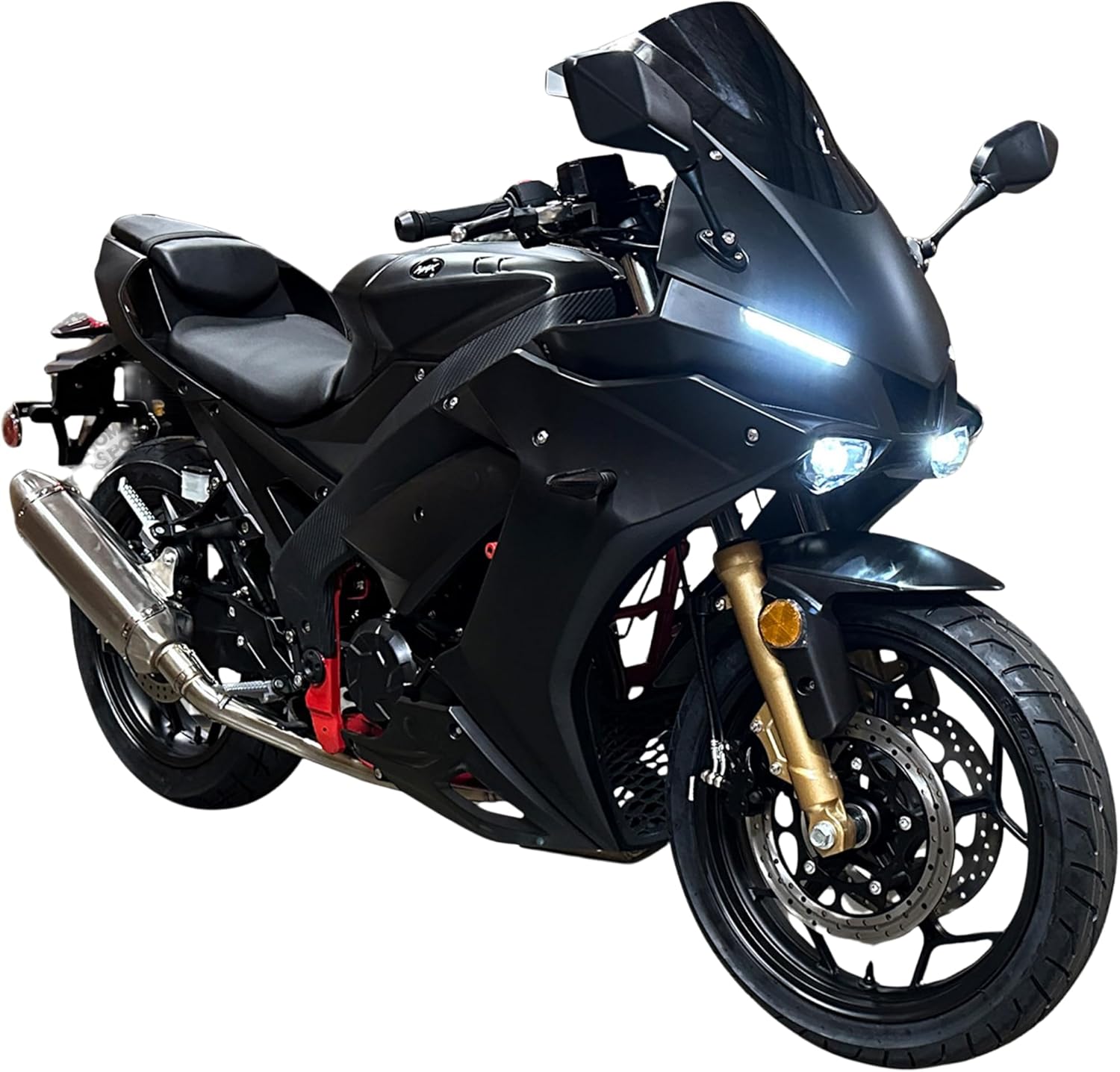
The crate arrived on a pallet, typical for bikes in this category. Inside: the assembled motorcycle with handlebars removed for transport, two mirrors in a separate box, a basic tool kit, the owner’s manual, the Manufacturer’s Certificate of Origin, and a bill of sale. The packaging was adequate — cardboard corner braces and zip ties holding the front wheel in a chock — but not excessive. There was no battery tender, no cover, and no extra oil. You will need to buy a battery charger if you do not already own one, because the battery arrives dry and requires filling and an initial charge. The tool kit includes a spark plug wrench, Allen keys, and combination wrenches — enough for basic assembly but not for anything beyond that.
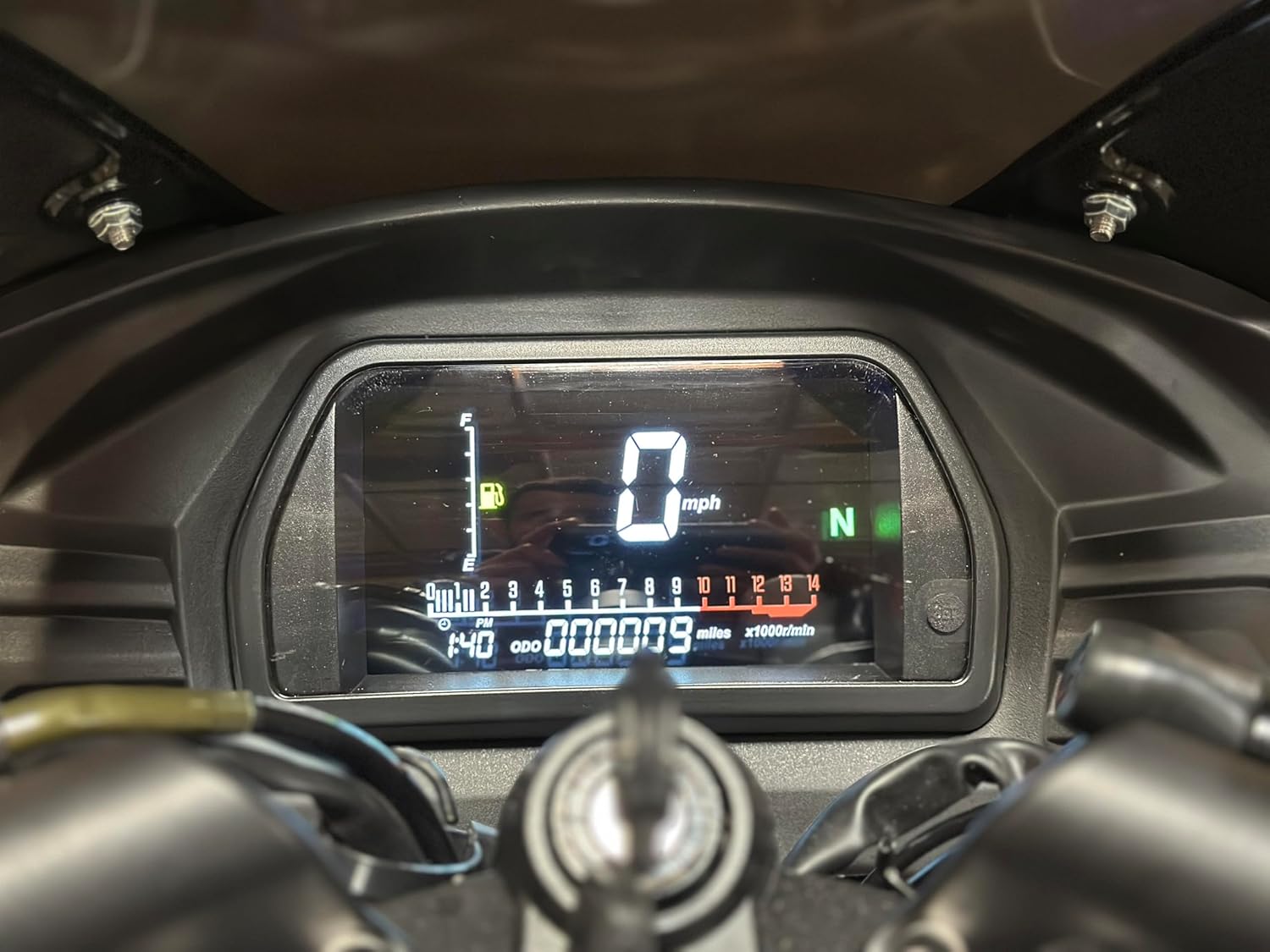
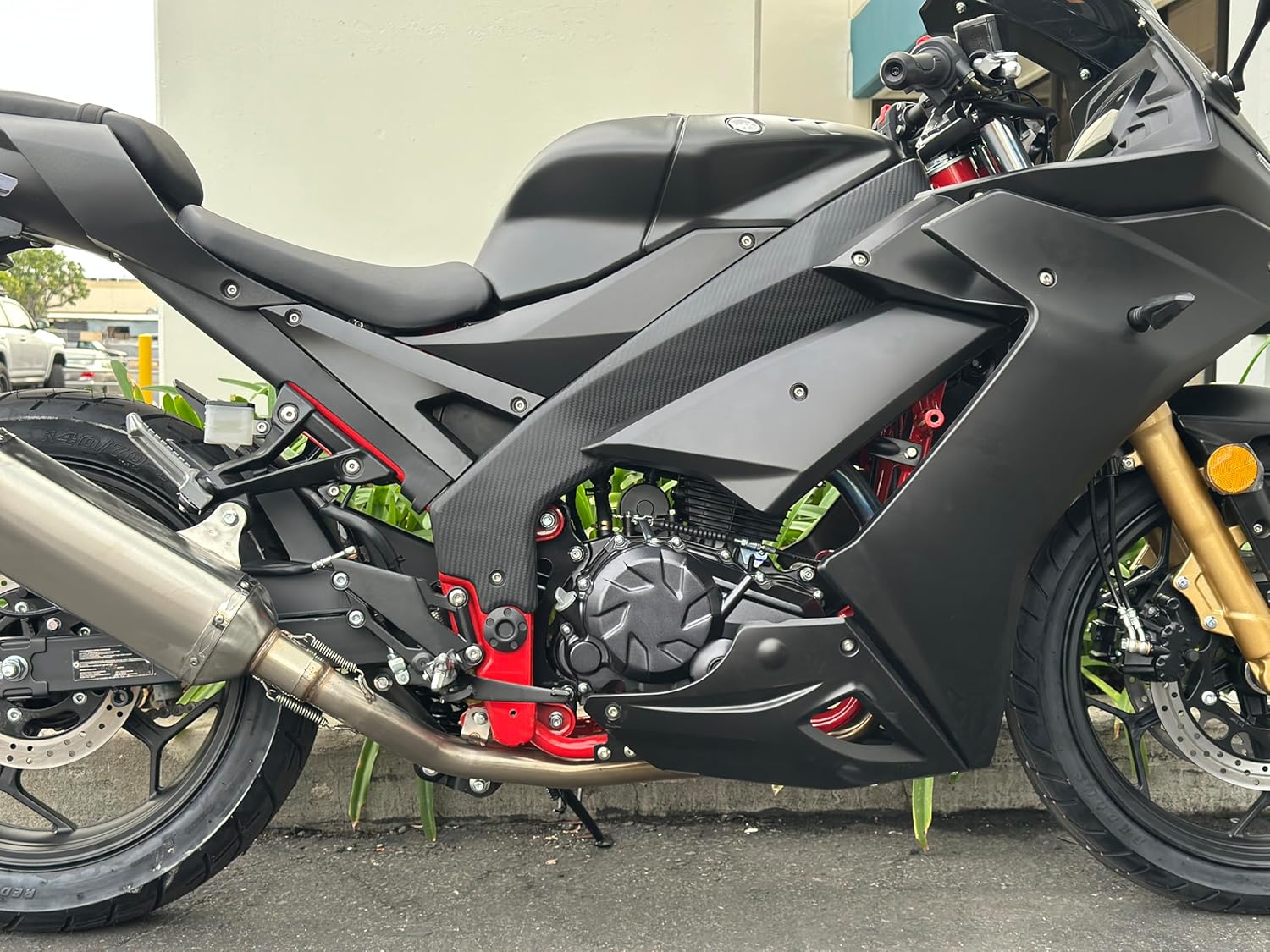
Out of the crate, the red powder-coated frame and gold shocks catch the eye. The matte black body panels have a consistent finish with no visible orange peel or runs. Weight feels manageable at a claimed 295 pounds net — I could move it around the garage without straining. The 17-inch alloy wheels are DOT-approved and the tires are all-terrain pattern, which felt odd for a street-oriented bike. More on that later. The digital dash is readable but small, and the switchgear feels functional rather than refined. First impressions suggest a bike built to a price point with a few visual flourishes that punch above its cost.
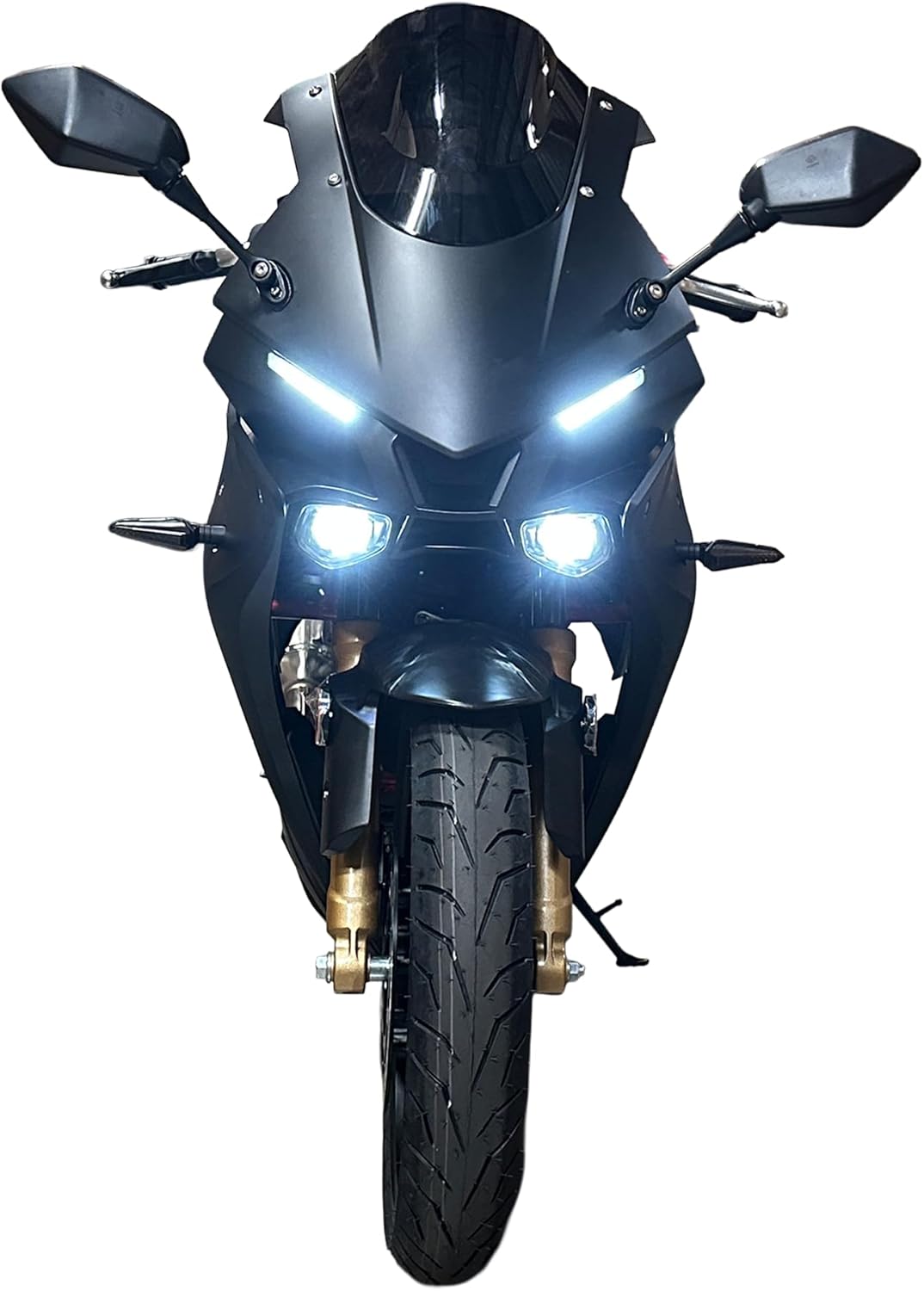
Assembly took about 90 minutes: install handlebars, attach mirrors, mount the front fender, fill and charge the battery, add fuel. The manual covers basic assembly steps but skips important torque specs — I used a medium-strength thread locker on the handlebar clamp bolts based on experience. The engine fired on the second press of the electric start button despite 40-degree ambient temperatures. No choke, no throttle coaxing. The idle settled to a steady 1,400 rpm within ten seconds. That alone justified the EFI premium. The clutch pull is light, and the six-speed transmission shifted cleanly through all gears in the parking lot. First impression: the bike feels smaller than the photos suggest, which is good for shorter riders but might disappoint someone expecting a full-size 600 replica.
I used the X22RR for my daily 22-mile commute, which includes surface streets and a 55-mph divided highway. The fuel injection continued to deliver consistent cold starts. The digital speedometer is accurate within 2 mph compared to GPS, and the odometer worked without issue. What emerged as a pattern: the suspension feels fine on smooth pavement but gets busy over expansion joints and patched asphalt. The rear shock has preload adjustment but no rebound damping control, and at 175 pounds I found the rear end pogo-ing slightly over repeated bumps. The seat is comfortable for about 45 minutes before pressure points develop on longer rides. The all-terrain tires produce noticeable hum on asphalt above 50 mph.
On the third weekend, I took the bike on a 120-mile highway loop with sustained 65–75 mph sections, including a 3-mile uphill grade against a 15-mph headwind. The EFI system handled altitude changes without hesitation — a clear win over a carbureted bike that would have required mixture adjustment or at least shown some stumble at the higher elevation. However, the air-cooled engine temperature climbed noticeably on the uphill. The cooling fan cycled frequently, and I could feel heat radiating from the cylinder through the frame tunnel. At one point, the engine felt flat on throttle response near the top of the grade. It recovered quickly on the downhill, but this confirmed the limit: the X22RR can do highway passes, but it prefers to be ridden at 55–65 mph rather than pushed to its 75+ mph top end for extended periods.
Over six weeks, the transmission loosened up — the shifts that felt notchy on day one became smoother. The clutch engagement point stayed consistent. Fuel economy averaged 71 mpg across the full test, which is excellent for a 250cc bike. The digital dash remained legible in direct sunlight but shows fingerprints easily. The only issue that emerged was a loose bolt on the rear brake reservoir bracket that I caught during a routine check. Nothing fell off, but the quality of fastener retention is a reminder that this bike benefits from an owner who is handy with a wrench. This Venom X22RR review and rating reflects a bike that improved with break-in but requires attentive maintenance.
| Specification | Value |
|---|---|
| Engine | Single cylinder, 4-stroke, air-cooled, 250cc, fuel-injected |
| Fuel System | Electronic Fuel Injection (Delphi ECU) |
| Transmission | 6-speed manual, sport clutch |
| Brakes | Front and rear hydraulic disc |
| Net Weight | 295 lbs |
| Gross Weight | 365 lbs |
| Dimensions (LxWxH) | 80 x 27 x 47 inches |
| Wheels | 17-inch DOT-approved alloy |
| Top Speed (claimed) | 75+ mph |
| Frame | Powder-coated red |
| Model Number | BD250-16 |
For more context on what to look for in budget-friendly motorcycles and gear, read our review of shop tools that make DIY maintenance easier.
The X22RR is optimized for the rider who values EFI reliability and low purchase price over suspension sophistication and long-distance highway comfort. The manufacturer sacrificed suspension adjustability and tire quality to hit the $3,499 price point and paid for the Delphi EFI system. For the right buyer, that trade-off makes sense.
| Product | Price | Key Strength | Key Weakness | Best For |
|---|---|---|---|---|
| Venom X22RR | $3,499 | EFI at lowest price point | Soft suspension, all-terrain tires | Budget-focused commuters who want no-choke starts |
| Honda CB300R | $4,999 (used) | Liquid cooling, Honda reliability, dealer support | Higher cost, no new models at this price | Riders who prioritize long-term reliability and highway comfort |
| Kawasaki Z400 | $4,999 (used) | 399cc power, liquid cooling, refined chassis | More expensive, heavier | Riders who want more passing power and better suspension |
| Generic Carbureted 250 | $1,999–$2,499 | Lowest price | Carburetor cold-start issues, lower build quality | Absolute budget buyers who can tolerate choke routines |
Choose the X22RR if EFI is non-negotiable and your budget cannot stretch to $5,000 for a used Honda or Kawasaki. During my test, the fuel injection eliminated the single biggest frustration of budget motorcycling: unreliable cold starts. If your riding stays below 65 mph and your roads are smooth, the suspension limitations will not bother you. The 71 mpg fuel economy also means this bike pays back part of its purchase price over the first few thousand miles compared to a carbureted bike that gets 55–60 mpg. This Venom X22RR review honest opinion is that it delivers on its core promise: affordable EFI commuting.
If your commute includes sustained 70+ mph highway sections or your roads have rough pavement, look at a used Honda CB300R or Kawasaki Z400. Both offer liquid cooling that handles highway heat better, plus suspension that actually controls motion. You will pay $1,500–$2,000 more on the used market, but you get dealer support and parts availability through standard channels. For the price of a new X22RR plus a replacement shock and street tires, you approach that used Japanese bike price anyway. Consider our review of portable power stations for long trips if you plan extended rides and need charging on the go.
The actual assembly steps are straightforward, but the manual skips the battery preparation entirely. You need to fill the battery with the included electrolyte, let it sit for 30 minutes, then charge it with a 12-volt battery charger for 2–3 hours before installation. If you try to start the bike on the factory charge, it will crank slowly and may not fire. Also, the handlebar clamp bolts need thread locker — the manual suggests Loctite but does not specify grade. Use medium-strength. The mirrors are reverse-threaded on one side, which the manual does not mention; test fitment gently to avoid cross-threading.
These tips come from my extended test period and are specific to the Venom X22RR review and rating experience.
This Venom X22RR review honest opinion is that the bike serves a specific slot well, but it does not stretch beyond it.
The Venom X22RR is priced at $3,499.99 USD at the time of this review. In the current market, that is the floor for a new, fuel-injected 250cc sport bike. A used carbureted Chinese bike can be had for $1,500–$2,000 less, but you lose EFI and accept unknown maintenance history. A used Honda CB300R typically runs $4,500–$5,500 depending on year and condition. The value proposition is clear: you get EFI at the lowest entry price, but you trade it against suspension quality and dealer support.
I consider the X22RR fair value at this price. It is not a bargain if you factor in the tire replacement ($200–$300) and the possibility of an aftermarket shock ($150–$250), which push the effective cost toward $4,000. At that point, the gap to a used Japanese bike narrows. But if you ride the bike as-is and accept the stock tires, $3,499 delivers a genuine EFI experience that works.
The safest buying channel is Amazon, where the return policy is clear and counterfeit risk is minimal. The listing comes with the MCO and bill of sale for registration. Avoid third-party marketplaces that do not offer buyer protection. The manufacturer also sells through its own site, but shipping and support timelines vary.
Price verified at time of publication
Check the link for current availability and any active deals.
The X22RR comes with a 30-day parts warranty from the manufacturer, which covers manufacturing defects but not wear items or damage from assembly errors. This is a short warranty, and it reflects the cost structure. Support is available through email and phone during business hours. I contacted support once during my test to ask about a diagnostic code on the digital dash and received a reply within 24 hours with a clear answer. That said, you ship the motorcycle at your expense if a warranty claim requires physical return. Riders who value a multi-year warranty and local dealer support should factor that into their decision. The Venom X22RR review verdict is that the bike itself is solid for the price, but the warranty is a reflection of the budget segment rather than a premium offering.
Six weeks of riding demonstrated that the Delphi EFI system is the genuine differentiator — the X22RR starts and runs consistently in conditions where carbureted bikes struggle. The fuel economy is excellent, the transmission improves with break-in, and the overall build quality is acceptable at this price point. The suspension, tires, and air-cooled engine limit the bike to moderate speeds and smooth roads, which is where it belongs. This Venom X22RR review found a bike that does one thing — affordable EFI commuting — and does it well within its boundaries.
Conditionally worth buying. If you need EFI reliability, are willing to turn a wrench occasionally, and your riding stays at or below 65 mph on decent roads, the X22RR delivers value that nothing else at this price matches. If your needs include highway cruising, passenger comfort, or a turnkey ownership experience, look at a used Japanese bike. I rate it 3.5 out of 5 — the EFI earns the points, and the suspension and tires lose one. The other half-point goes to the short warranty and limited support network. Buy it for the injection system, not the chassis.
If you own an X22RR, I want to know how your experience compares. Did your EFI system perform as consistently? What tires did you switch to, and did it transform the handling? Drop a comment below and share your real-world impressions. You can also check the current price of the X22RR to see if the deal is still live.
At $3,499, it is worth it specifically for the EFI system. No other new bike at this price offers fuel injection, which means no choke, no cold-start drama, and better fuel economy. You sacrifice suspension refinement and dealer support, but if EFI is your priority and your budget is fixed, the value is real. If you can spend $4,500 on a used Honda CB300R, that is likely a better long-term investment.
The Honda CB300R wins on liquid cooling, suspension quality, and dealer network. The X22RR wins on price and fuel economy. The Honda is the better bike for highway riding and long-term ownership. But it costs $1,000–$2,000 more on the used market. If the cheaper bike leaves room in your budget for gear, insurance, and maintenance, the X22RR makes more financial sense for a short commute.
Plan for two hours if you are methodical. The mechanical assembly is simple: install handlebars, mirrors, and fender. The battery preparation is the tricky part because the manual does not explain the fill-and-charge process clearly. You also need a 12-volt battery charger, which is not included. A first-time buyer should watch a setup video beforehand rather than relying solely on the paper manual.
A 12-volt battery charger is essential for the initial battery fill and for maintaining the battery during storage. You also need a torque wrench or at least a set of Allen keys and combination wrenches. Consider a quality set of metric sockets for the brake caliper and sprocket bolts. Street tires are not included but are worth budgeting for if the all-terrain tread bothers you.
The 30-day parts warranty covers manufacturing defects on the engine, transmission, and electrical components. It does not cover wear items like tires, brake pads, chain, or sprockets. Support responded to my email within 24 hours with a useful answer. However, you pay shipping for warranty returns, and the 30-day window is shorter than most buyers expect. Read the warranty card before purchasing.
The safest option based on our research is this verified retailer, which offers competitive pricing alongside a clear return policy and genuine product guarantee. Amazon’s buyer protection and the direct-from-manufacturer listing mean you avoid the counterfeit risks of third-party marketplace sellers. Price fluctuates with inventory, so the link above shows the current price.
The seat is long enough for a passenger, and the foot pegs are present, but the suspension is not set up for a second rider. At 175 pounds, the rear shock was borderline with just me. Adding a passenger pushes the rear suspension past its damping capacity on bumpy roads. Short trips on smooth pavement are possible, but regular two-up riding is not this bike’s strength. Look at a used Honda CB300R for that use case.
Insurance rates vary by location and rider history, but as a 250cc bike with a $3,499 value, it falls into the cheapest bracket. Expect $150–$300 per year for liability coverage, depending on your state and riding experience. Full coverage typically adds $100–$200 annually. It is significantly cheaper to insure than a 600cc sport bike, which is one of the hidden advantages of staying at 250cc.
Reviews You Can Actually Use
We test products so you do not have to guess. No sponsored rankings. No filler content. Subscribe and get honest reviews, buying guides, and practical tips delivered directly to you.